This beginner-friendly guide explains civil rights and civil liberties for beginner readers learning the basic language of constitutional protections. It keeps the focus on practical examples, core definitions, and the questions that make civic debates easier to understand.
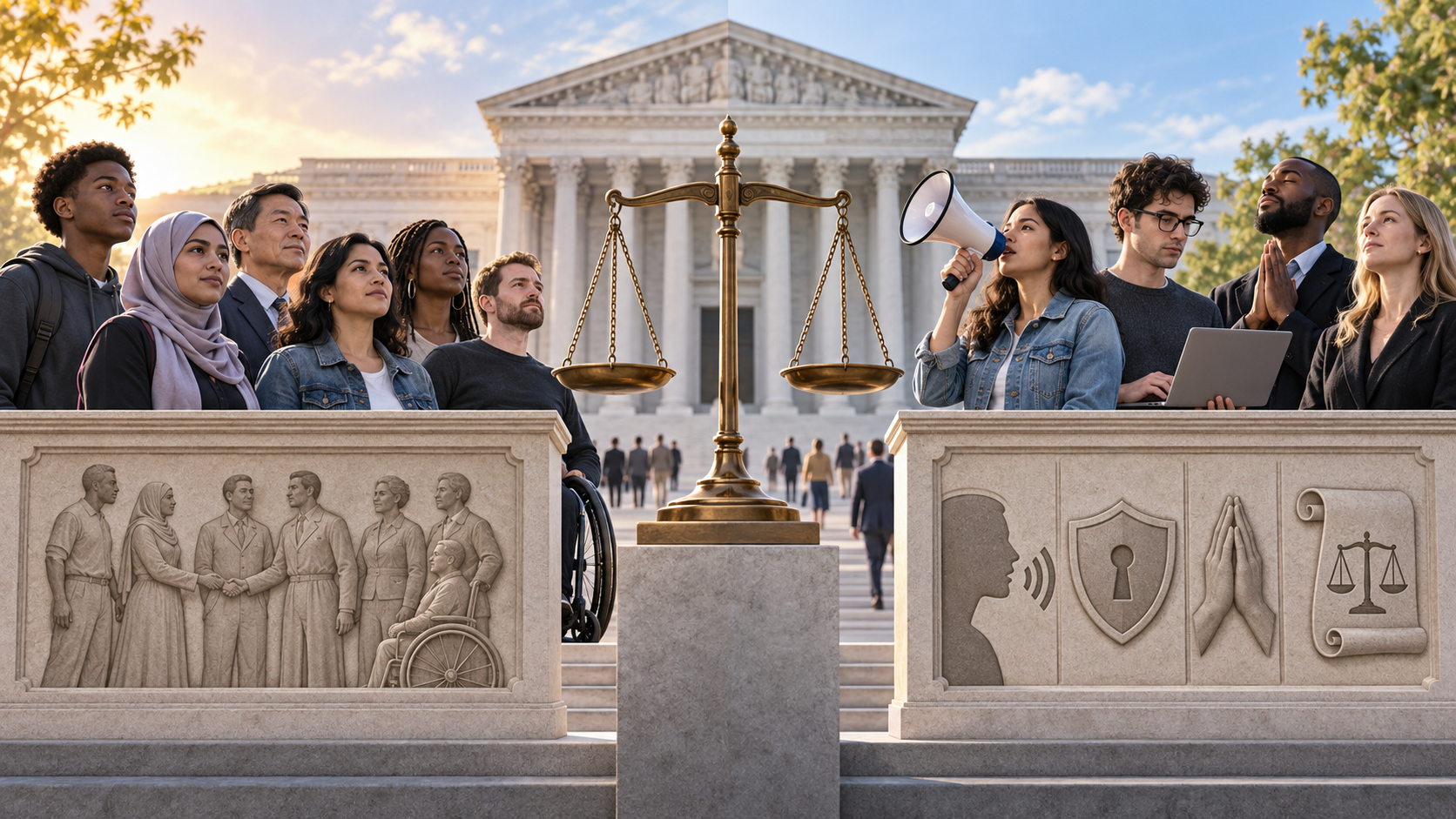
Civil rights and civil liberties are two major ways the law protects people from unfair treatment and government overreach. Civil rights focus on equal treatment and protection from discrimination. Civil liberties focus on individual freedoms that government generally must respect, such as speech, religion, privacy, due process, and peaceful assembly. The two ideas often overlap, but the difference helps explain many debates about schools, policing, voting, public accommodations, workplaces, technology, and courts.
Civil rights in plain language
Civil rights are protections that help ensure people are treated equally in public life. They are often connected to discrimination based on race, color, religion, sex, national origin, disability, age, or other protected categories depending on the law. Civil rights rules can apply to voting, housing, education, employment, public services, transportation, health care, and access to businesses that serve the public. The central question is whether people are being denied equal treatment or equal opportunity.
Civil liberties in plain language
Civil liberties are freedoms that limit what government can do to individuals. These include freedom of speech, press, religion, and assembly; protection against unreasonable searches; due process before government takes life, liberty, or property; and protections in criminal proceedings. Civil liberties do not mean a person can do anything without consequence. They mean government needs a valid legal basis, proper procedure, and constitutional justification before restricting certain freedoms.
Where the two overlap
Civil rights and civil liberties often appear together. A protest may involve free speech and assembly, which are civil liberties, while also raising civil rights claims about equal treatment. A school policy may involve religious freedom, privacy, disability access, or discrimination. A policing dispute may involve search-and-seizure rules, due process, equal protection, and public safety. Real cases rarely stay in one clean category, which is why courts and lawmakers often analyze several rights at once.
Why beginners should care
These protections shape ordinary interactions with government, employers, schools, landlords, police, and public agencies. They determine whether people can speak openly, practice faith, vote, receive fair procedures, challenge discrimination, and participate in civic life. Understanding the vocabulary makes it easier to evaluate news stories without getting lost in legal jargon.
Bottom line
The useful habit is to connect civil rights and civil liberties to real institutions and real choices. Once the terms are clear, it becomes easier to see which rights are involved, who has responsibility, and what a fair solution would need to protect.