
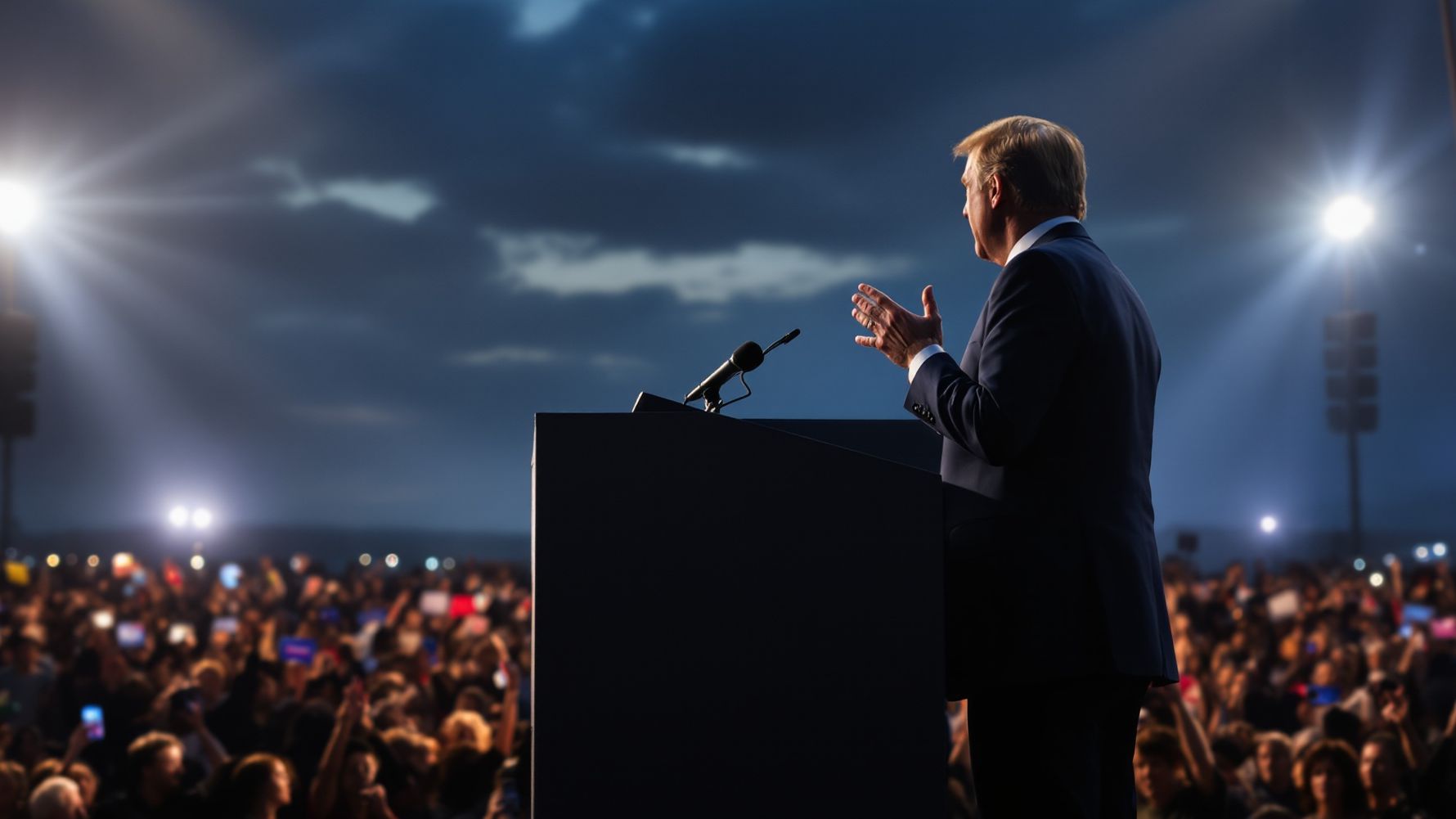
Where a political speech takes place can be just as meaningful as the words spoken. Speech settings and backdrops are carefully chosen to reinforce a campaign’s message, connect with voters, and create powerful visual moments that resonate across media platforms. A candidate speaking from a factory floor, a historic landmark, a school gymnasium, or a packed outdoor rally each sends a different signal about priorities, values, and identity. Campaign teams carefully design the environment behind a podium to frame the narrative they want audiences to see. Flags, banners, architectural features, or carefully selected supporters standing behind the speaker all help create a visual story that aligns with the message being delivered. Lighting, stage positioning, and camera angles are also considered to ensure the backdrop appears strong and compelling in photographs, television broadcasts, and social media clips. These visual settings are rarely accidental. Every location and design element helps communicate themes such as economic growth, national pride, community engagement, or policy focus. The setting becomes part of the message itself. In this section of Politics Street, we explore how speech settings and backdrops shape the atmosphere of political events and turn speeches into powerful visual moments that influence public perception.
A: They shape the mood, symbolism, and public perception of the message before the speech begins.
A: It frames the speaker, reinforces the message, and creates strong visual focus for audiences and cameras.
A: They add patriotic symbolism and create a recognizable political setting.
A: It creates energy, visible support, and a more engaging televised image.
A: Balance, clarity, symbolism, and a layout that keeps attention on the speaker.
A: Yes, camera framing is a major factor in how speech settings are arranged.
A: Yes, a simple and intentional backdrop can look strong and keep the message clear.
A: Because the location itself can reinforce the topic, values, or emotional weight of the speech.
A: Creating a setting that feels cluttered, distracting, or disconnected from the message.
A: A combination of symbolism, strong visuals, audience energy, and a clear connection to the campaign’s story.