
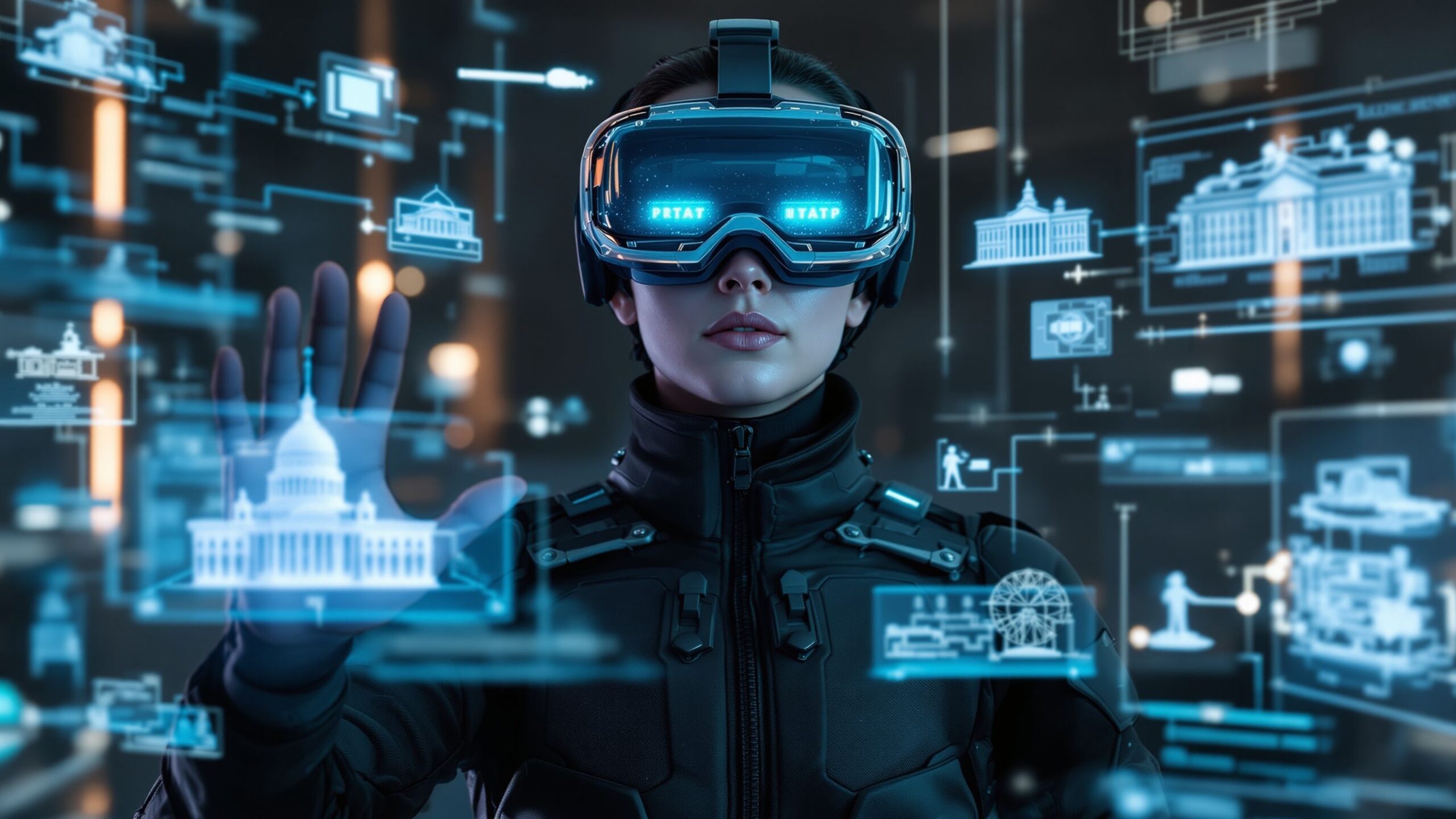
Virtual reality (VR) and augmented reality (AR) technologies are opening new possibilities for civic education and political engagement. Through immersive simulations, these technologies allow people to step inside the world of government, elections, and public decision-making in ways that traditional media cannot replicate. Instead of simply reading about political processes, users can experience them firsthand—exploring how legislation is debated, how elections unfold, and how policy decisions affect communities. Civic simulations built with VR and AR technology can place participants in the role of lawmakers, campaign strategists, journalists, or voters. These experiences often recreate government institutions, historical political events, or complex policy debates, allowing users to interact with systems that shape real-world governance. By visualizing how decisions ripple through society, immersive simulations can deepen understanding of democratic processes. Educational institutions, museums, and civic organizations are increasingly experimenting with these technologies to make political learning more engaging and accessible. In this section, you’ll explore articles examining how VR and AR simulations are being used to teach political systems, encourage civic participation, and help audiences experience the mechanics of democracy in entirely new ways.
A: They are virtual reality experiences designed to teach users about political systems, government, and public policy.
A: Augmented reality overlays digital civic information onto real-world environments through devices like smartphones.
A: Yes, many educational institutions use them to teach government and public policy concepts.
A: They can learn about elections, policy decisions, diplomacy, and government processes.
A: They often use similar interactive mechanics but focus on educational and civic themes.
A: Yes, some experiences recreate historical political moments for learning purposes.
A: VR simulations usually require headsets, while AR experiences often work on smartphones or tablets.
A: The field is growing, with more projects appearing in education and public institutions.
A: Interactive experiences may encourage greater interest in public participation.
A: They help people visualize complex political systems in engaging and interactive ways.