
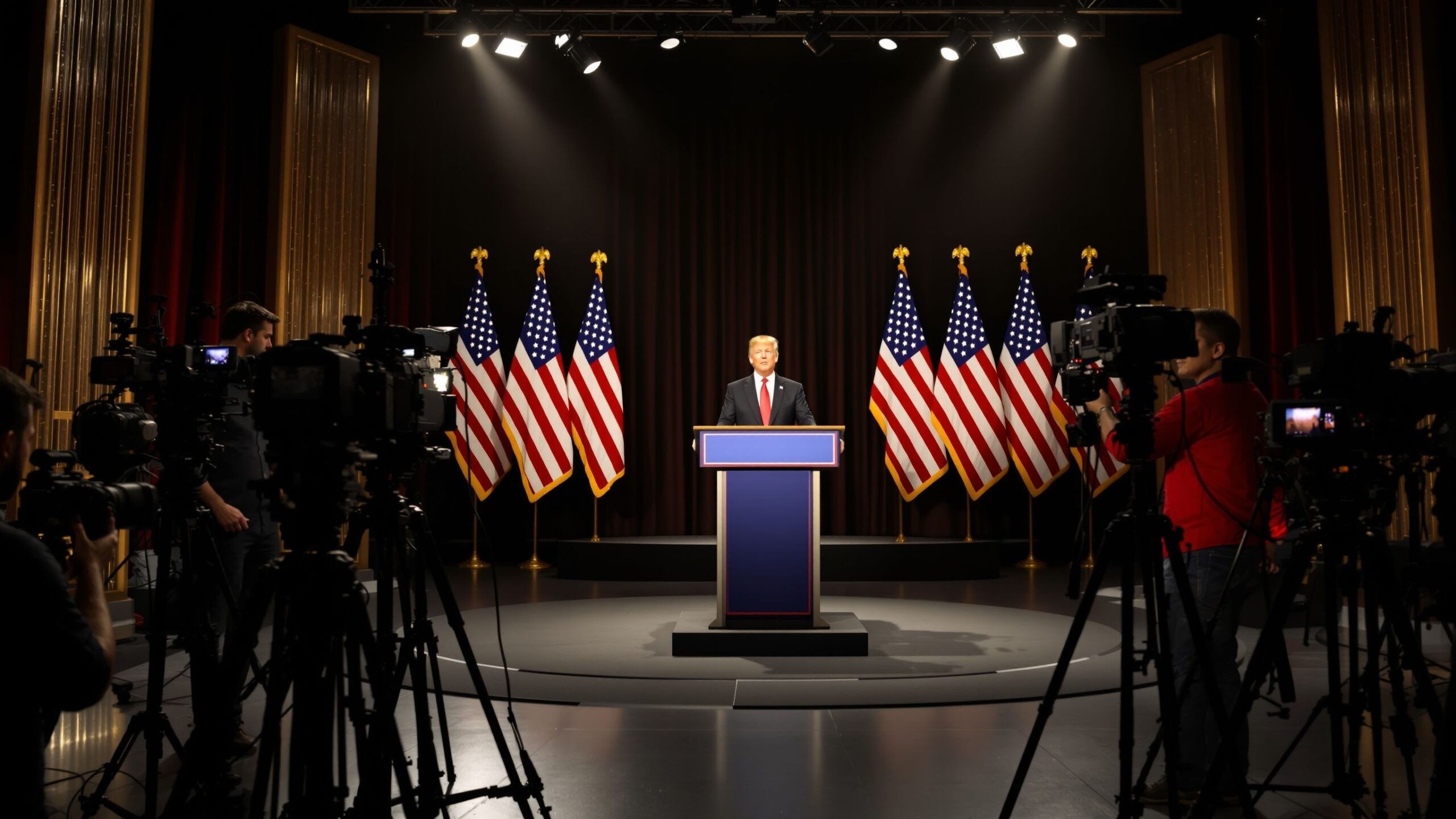
In modern politics, how an event appears on camera can shape public perception as much as the message itself. Media lighting and framing are critical elements of political communication, transforming speeches, debates, and press conferences into powerful visual moments. Carefully placed lights, camera angles, and stage positioning ensure that candidates appear confident, clear, and visually compelling to audiences watching on television, livestreams, and social media. Lighting is used to highlight the speaker while maintaining a balanced and professional look on camera. Soft front lighting reduces harsh shadows, while background illumination helps create depth and separation from the stage backdrop. These techniques ensure that facial expressions, gestures, and visual details remain visible and engaging for viewers. Framing is equally important. Camera placement determines how the speaker is presented—whether in a close-up for emotional emphasis or a wider shot that captures the crowd, flags, and stage design. Strategists consider sightlines, background elements, and supporter placement to ensure every frame reinforces the campaign’s narrative. In this section of Politics Street, we explore the behind-the-scenes craft of media lighting and framing—and how visual production techniques help political moments resonate with audiences around the world.
A: It ensures the speaker appears clear, professional, and visually engaging.
A: Framing refers to how subjects and background elements are positioned within the camera shot.
A: Multiple cameras allow different perspectives, including close-ups and wide crowd shots.
A: It is the primary light source used to illuminate the speaker.
A: Backlighting separates the subject from the background and adds depth.
A: Different camera angles and compositions can make a speaker appear more authoritative or relatable.
A: They capture facial expressions and emotional moments.
A: Changing sunlight and weather conditions require lighting adjustments.
A: They often test equipment and rehearse before events begin.
A: To present political messages clearly, professionally, and visually compelling to audiences.