
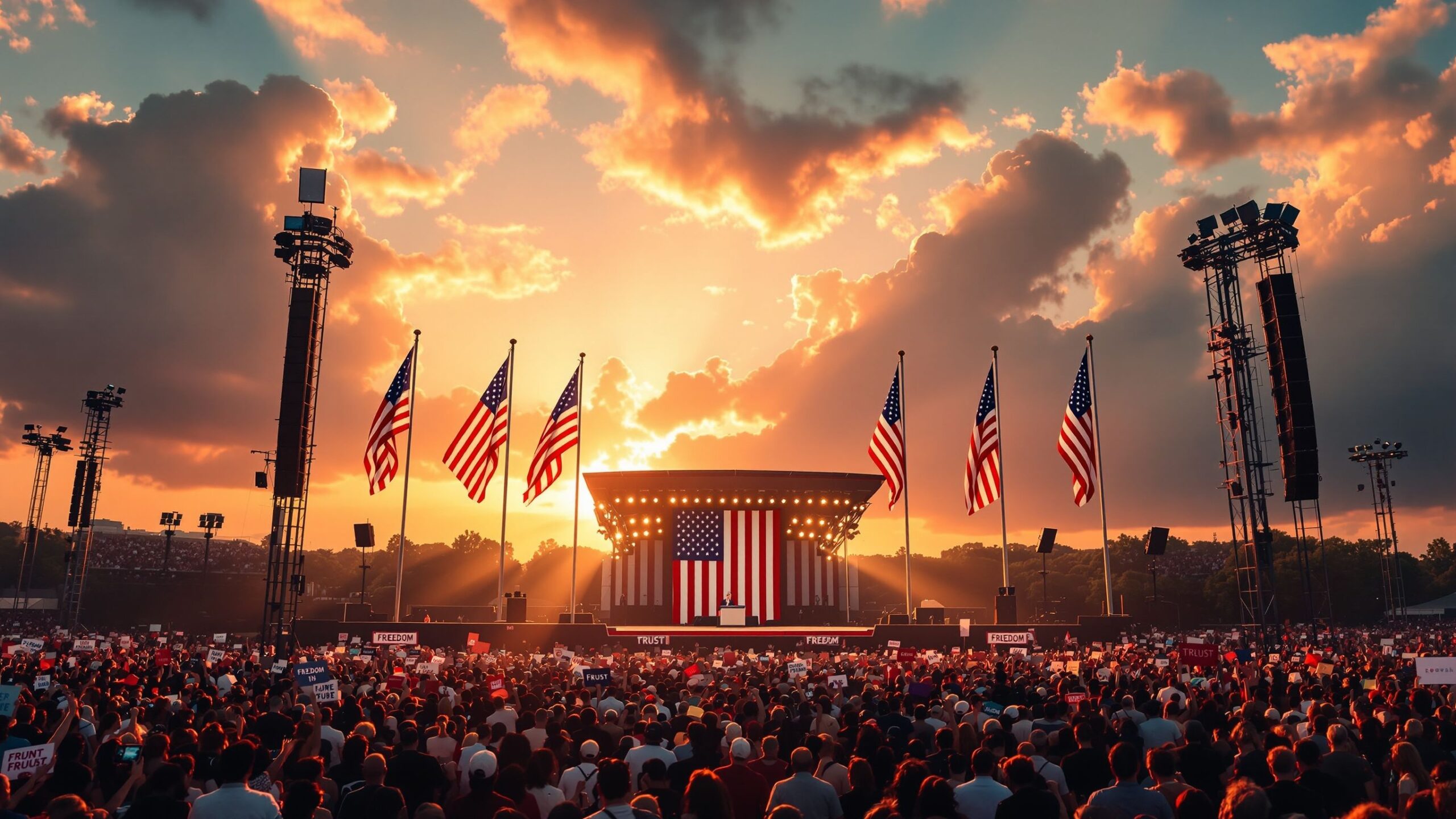
Behind every powerful political speech is a carefully crafted stage that shapes the moment, frames the message, and amplifies the candidate’s presence. Campaign stage design is far more than a backdrop and podium—it is a strategic blend of visual storytelling, branding, lighting, and crowd energy that turns a political event into a memorable experience. From towering flag displays and dramatic lighting rigs to carefully placed supporters and media sightlines, every detail is designed to reinforce a campaign’s identity and message. Modern campaign stages are built to communicate instantly. A single photograph from a rally can travel around the world within seconds, making visual impact just as important as the words spoken. Designers consider camera angles, crowd density, colors, symbols, and signage to ensure the stage looks powerful both in person and on television or social media. In this section of Politics Street, we explore the fascinating world behind campaign stage design—from the psychology of political visuals to the logistics of rally setups and televised debates. Discover how stages become powerful political tools that help candidates command attention, inspire supporters, and shape public perception.
A: It helps shape how voters experience the candidate’s message, energy, and leadership image.
A: They create visual enthusiasm, emotional reinforcement, and a strong televised backdrop.
A: Rally stages focus on excitement and branding, while debate stages emphasize fairness, structure, and equal visibility.
A: They add patriotic symbolism and create a recognizable political visual language.
A: Usually both, but broadcast visuals are extremely important because they reach far more people.
A: Lighting improves visibility, camera quality, mood, and the perceived professionalism of the event.
A: They allow flexible messaging, larger visuals, and easier branding updates during events.
A: Yes, if it supports the message, looks intentional, and keeps focus on the speaker.
A: A setup that looks cluttered, distracts from the candidate, or performs poorly on camera.
A: A clear visual theme, strong symbolism, confident staging, and moments that photograph beautifully.