
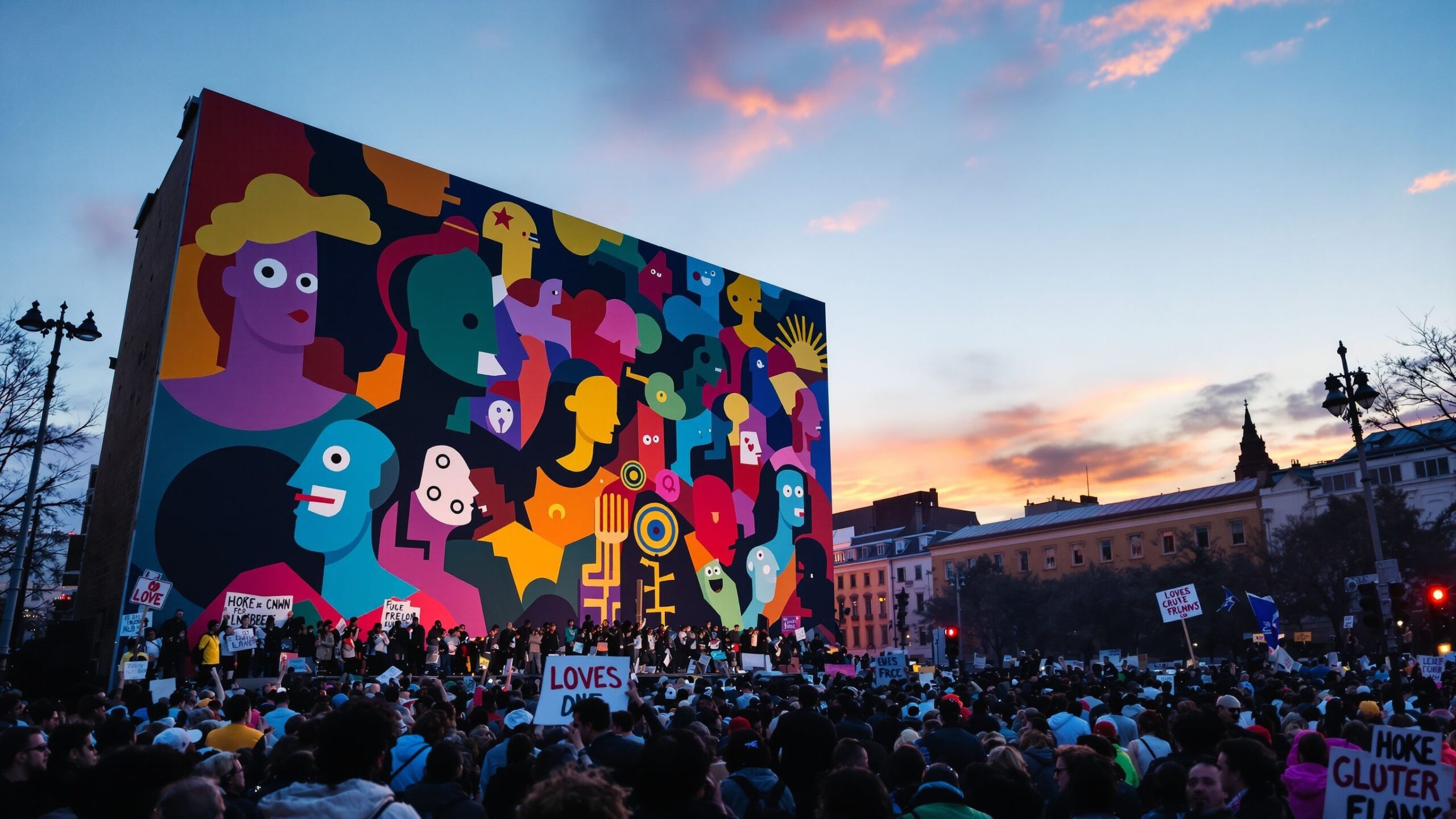
Politics has always inspired powerful forms of artistic expression. Political art and performance bring ideas, values, and social commentary to life through visual creativity, music, theater, and live public displays. These artistic elements can transform political messages into emotional experiences that resonate deeply with audiences, turning rallies, protests, and campaign events into memorable cultural moments. Throughout history, artists and performers have used creativity to challenge authority, celebrate movements, and amplify voices that demand change. Murals, protest art, stage performances, spoken word, music, and symbolic installations often become defining images of political eras. These works communicate ideas in ways that speeches alone cannot, reaching people through emotion, symbolism, and storytelling. In modern campaigns and civic events, artistic performances can energize crowds and build community around shared causes. Musicians, cultural performers, visual artists, and designers often collaborate with movements and campaigns to create experiences that blend politics with culture and creativity. The result is a powerful fusion of activism and artistry that captures attention and inspires participation. In this section of Politics Street, we explore the vibrant intersection of politics and creative expression—revealing how art and performance help shape movements, influence public dialogue, and bring political messages to life.
A: Political art uses creative expression to explore social, cultural, or governmental themes.
A: Performances allow artists to express ideas and emotions about political issues.
A: It can be found in public spaces, galleries, theaters, and community events.
A: Art encourages reflection and dialogue by presenting ideas in visual or emotional ways.
A: Murals are large, visible, and accessible to the public.
A: Yes, performers often explore political topics through theater, music, or movement.
A: Symbols help communicate ideas quickly and powerfully.
A: Not always, though they often encourage discussion and debate.
A: Digital media allows artists to reach global audiences instantly.
A: To inspire thought, conversation, and engagement with civic issues.