


Political Journalism
Political journalism sits at the powerful crossroads of media, democracy, and public accountability. It is the craft of uncovering the truth behind policies, campaigns, elections, and the people who hold power. From breaking news in bustling newsrooms to deep investigative reports that reshape public debate, political journalism brings the hidden mechanics of government and leadership into the public eye. Every headline, interview, and investigative story plays a role in helping
Social Media & Misinformation
In today’s digital world, political conversations move at the speed of a scroll. Social media platforms have transformed how information travels, turning tweets, posts, and viral videos into powerful forces that can influence elections, shape public opinion, and ignite global debates within minutes. While these platforms have opened new doors for communication and civic engagement, they have also created fertile ground for misinformation to spread rapidly and widely. Political journalists

Talk Shows & Podcasts
Political talk shows and podcasts have become some of the most influential stages for modern political conversation. Once dominated by traditional television broadcasts and radio programs, political commentary now thrives across streaming platforms, digital audio networks, and video podcasts that reach millions of listeners and viewers every day. These formats offer a more conversational, personality-driven approach to discussing politics, often blending analysis, interviews, debate, and storytelling. Unlike traditional news segments,

Political Cartoons
Political cartoons are one of the oldest and most powerful forms of political commentary. With just a few lines of ink and a sharp sense of satire, cartoonists can expose corruption, criticize leaders, and capture the mood of a nation. These visual commentaries distill complex political issues into bold imagery, symbolism, and humor that can resonate instantly with audiences. For centuries, political cartoons have played a vital role in journalism

Fact-Checking & Accountability
In a political world filled with speeches, promises, and competing narratives, fact-checking serves as one of journalism’s most important safeguards. Political leaders, campaigns, and public figures constantly make claims about policies, statistics, and events—but it is the role of journalists and independent watchdogs to verify those claims and ensure the public receives accurate information. Fact-checking transforms raw political statements into carefully examined truths, separating verified facts from exaggeration, spin, and
Propaganda & Persuasion
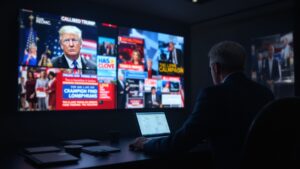
Politics has always been as much about communication as it is about policy. Propaganda and persuasion are powerful tools used by governments, political movements, campaigns, and interest groups to shape public perception and influence how people think about leaders, issues, and national identity. Through carefully crafted messages, images, slogans, and narratives, political communicators attempt to frame events, inspire loyalty, and rally support for particular causes or ideologies. Historically, propaganda has

Opinion Polls
Opinion polls are one of the most visible tools for measuring the pulse of public opinion. In modern political journalism, polls offer snapshots of how voters feel about candidates, policies, and major national issues at a specific moment in time. These surveys help journalists interpret political momentum, reveal emerging trends, and give audiences a clearer understanding of the evolving political landscape. During election seasons, polling data becomes a central feature
Media Ownership & Bias
Behind every news story lies a network of decisions about what to report, how to frame it, and which voices to amplify. Media ownership and editorial bias play a significant role in shaping political journalism, influencing how information reaches the public and how political narratives are constructed. From large media conglomerates and independent publishers to digital platforms and broadcast networks, the organizations that control media outlets can affect the perspectives

Influencers in Politics
The rise of social media has introduced a new force into political communication: the political influencer. These individuals—ranging from journalists and activists to commentators and content creators—use digital platforms to discuss political issues, interpret news events, and mobilize audiences in ways that traditional media once dominated. With millions of followers across platforms like video streaming sites, podcasts, and social networks, influencers have become powerful voices shaping how people engage with

Documentary Features
Political documentary features occupy a unique space between journalism and cinema. They go beyond headlines and breaking news to explore the deeper forces shaping governments, movements, and public life. Through interviews, archival footage, investigative research, and compelling storytelling, political documentaries bring audiences face-to-face with the people and decisions that influence history. Unlike daily news coverage, documentary features often take months—or even years—to produce. Filmmakers immerse themselves in complex issues, uncover