
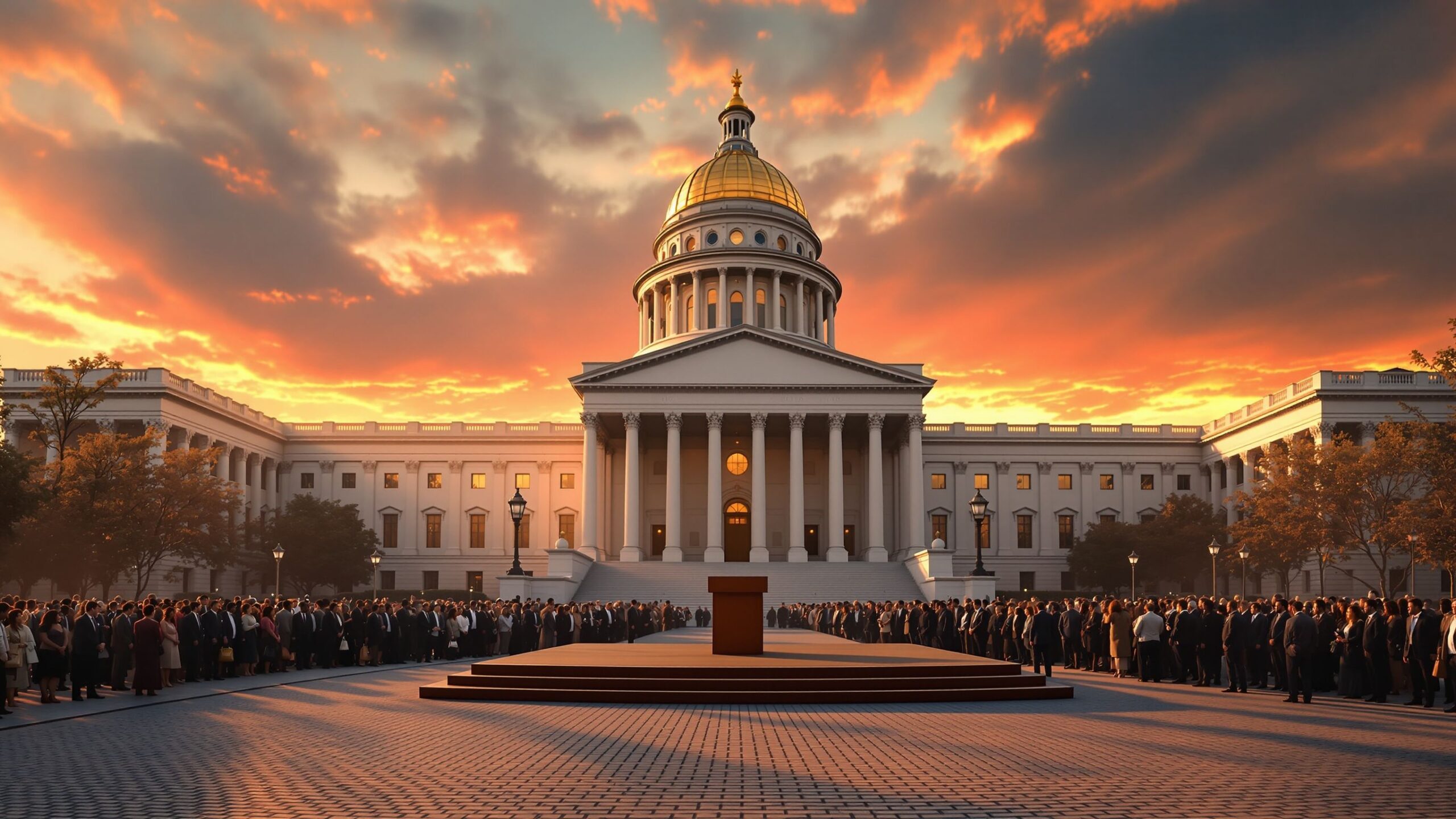
Architecture has always played a powerful role in politics. The buildings and spaces where political activity takes place—from grand government halls and historic capitols to modern debate stages and campaign headquarters—are designed to convey authority, identity, and purpose. Political architecture and civic spaces shape how citizens experience leadership, governance, and national symbolism. These environments are rarely neutral. Monumental columns, sweeping staircases, towering domes, and carefully designed public plazas communicate strength, stability, and tradition. At the same time, modern campaign spaces and civic venues are often designed to feel accessible and energetic, encouraging engagement and participation from the public. The architecture itself becomes part of the message, reinforcing themes of unity, democracy, heritage, or progress. Political spaces also influence how events are experienced visually. Camera framing, crowd movement, lighting, and stage placement are all affected by the design of the surrounding environment. Whether it is a candidate speaking in front of a historic government building or hosting a town hall in a community center, the setting adds meaning to the moment. In this section of Politics Street, we explore how political architecture and civic spaces shape the visual language of leadership, public gatherings, and democratic storytelling.
A: It refers to buildings and public spaces designed for government institutions and civic activities.
A: Monumental design symbolizes stability, authority, and national importance.
A: Domes historically represent unity and central authority.
A: They provide gathering spaces for civic events, rallies, and demonstrations.
A: They connect modern institutions with tradition and cultural heritage.
A: Through open layouts, glass facades, and accessible public spaces.
A: They reinforce national history and collective memory.
A: Yes, the design of civic spaces can shape how people interact with institutions.
A: Symbolism, historical significance, and cultural recognition.
A: To balance symbolism, accessibility, and functionality for democratic engagement.