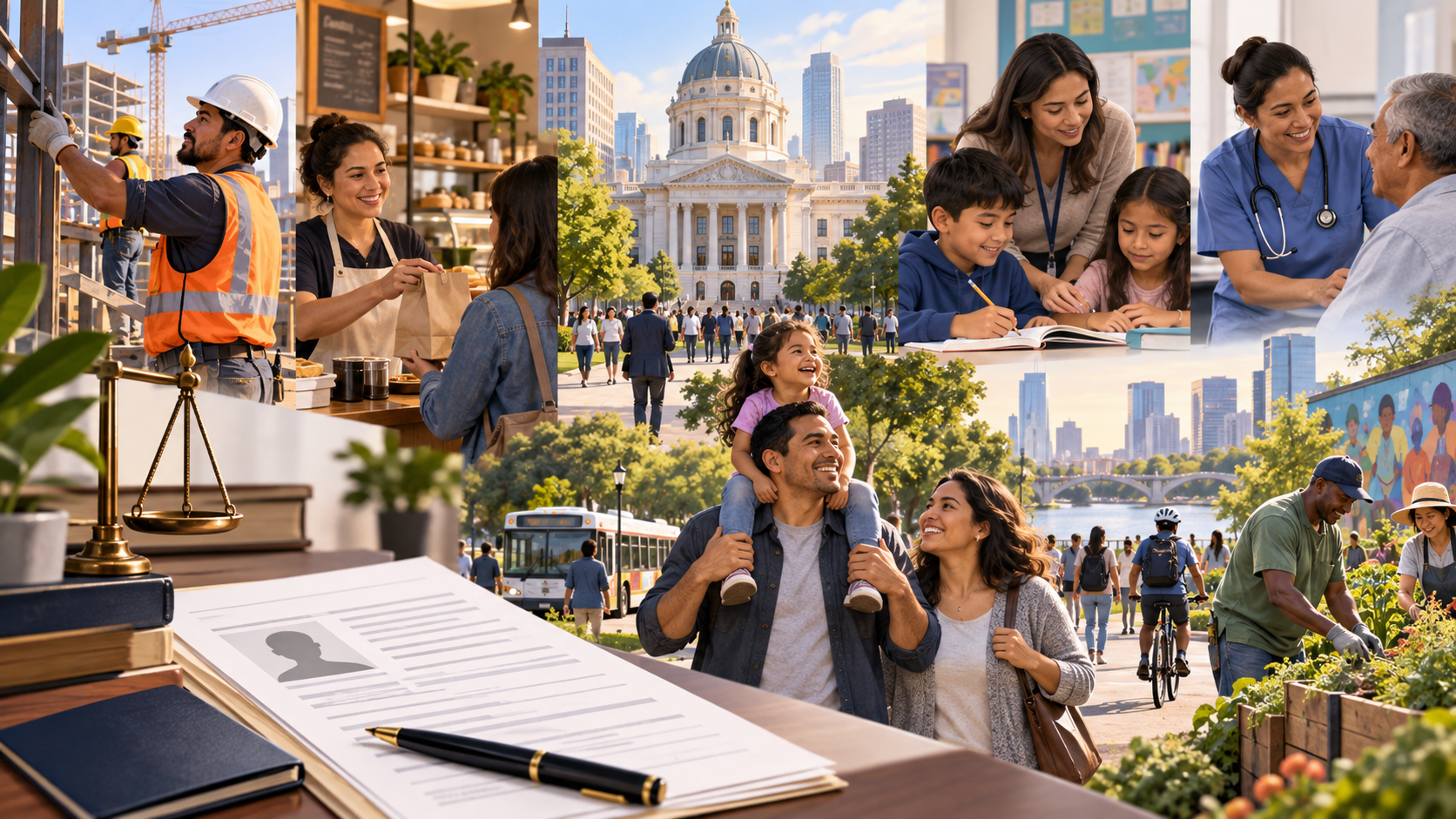
This beginner-friendly guide explains immigration policy for readers trying to understand real-world economic and social effects. It keeps the focus on practical examples, core definitions, and the questions that make civic debates easier to understand.
Immigration policy affects the economy and society because it shapes who can enter, work, study, start businesses, reunite with family, seek protection, or build a long-term future in a country. Those choices influence labor markets, public services, innovation, housing demand, schools, community life, and the way people experience belonging and security. The effects are not automatic or identical everywhere. They depend on the design of the rules, the capacity of public systems, local economic conditions, and how well institutions manage change.
Labor markets and business needs
Immigration can affect labor markets by changing the supply of workers, skills, entrepreneurship, and consumer demand. Some industries rely heavily on immigrant workers, including agriculture, construction, health care, hospitality, technology, logistics, education, and home care. In tight labor markets, immigration can help employers fill positions and keep services available. At the same time, policy has to address wages, working conditions, licensing barriers, and enforcement against exploitation so that workers are not played against each other.
Public services and local planning
New residents use schools, clinics, roads, courts, housing, transit, and emergency services, just like other members of a community. That can create pressure when local systems are already stretched. It can also strengthen communities over time when families pay taxes, open businesses, buy homes, volunteer, and participate in civic life. The key policy question is not only how many people arrive, but whether state and local governments have resources, planning tools, language access, and accurate information to respond well.
Family, culture, and community trust
Immigration policy also affects social life. Family-based immigration can keep households together, while long backlogs or enforcement actions can create uncertainty for mixed-status families. Clear rules and fair processes can increase trust in public institutions. Confusing rules, sudden changes, or long delays can make people afraid to report crimes, seek medical care, cooperate with schools, or plan for the future. Social effects are often harder to measure than jobs or tax revenue, but they shape whether policy works in practice.
Why the debate is often heated
Immigration sits at the intersection of economic need, national identity, humanitarian responsibility, border security, and local capacity. People may agree that the system should be orderly but disagree about priorities, numbers, enforcement, or legal pathways. A serious debate should ask how the policy affects workers, families, employers, schools, local budgets, public safety, and human rights at the same time.
Bottom line
The useful habit is to connect immigration policy to real institutions and real choices. Once the terms are clear, it becomes easier to see which rights are involved, who has responsibility, and what a fair solution would need to protect.