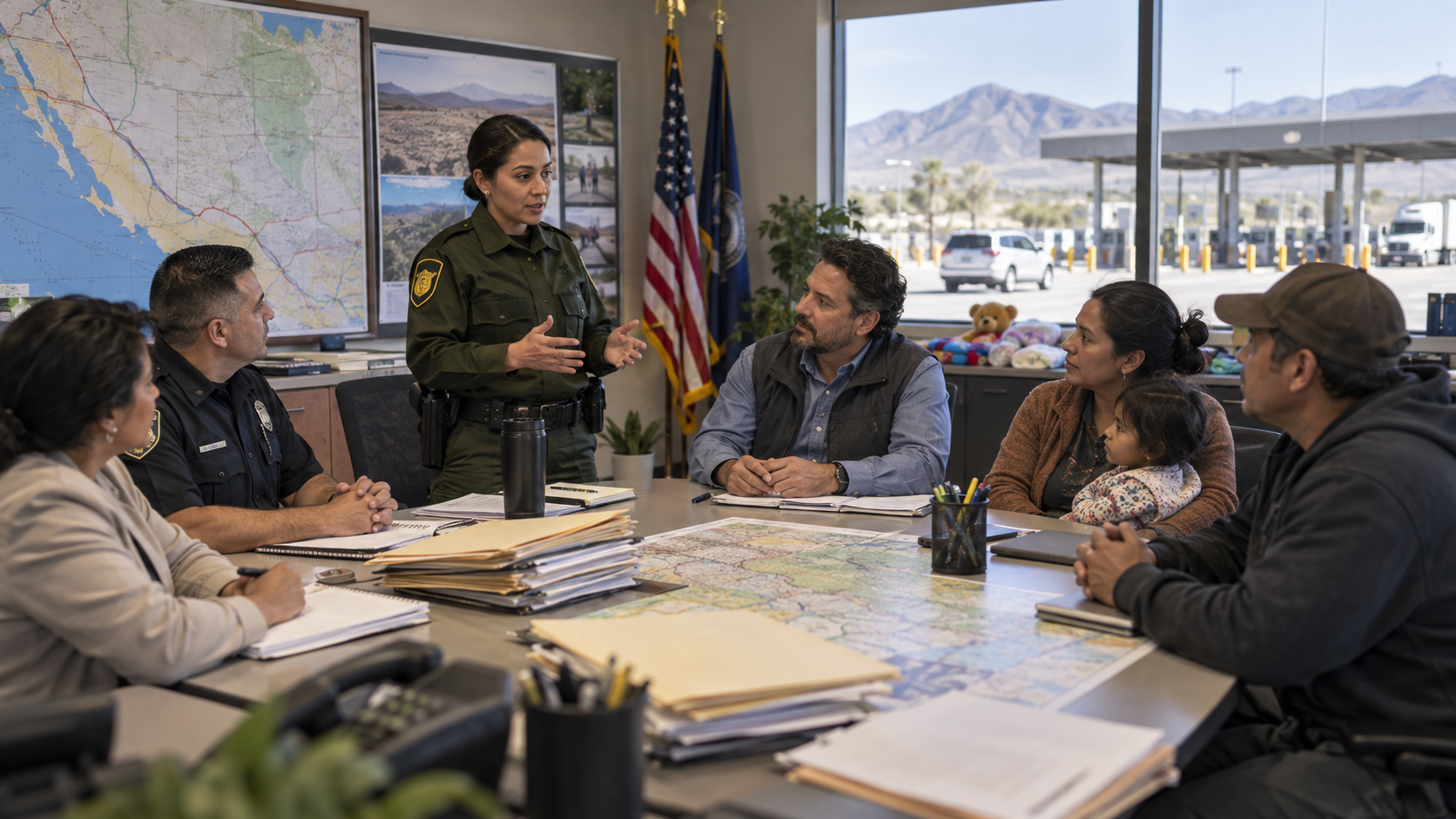
This beginner-friendly guide explains immigration and border policy in plain language for readers who want a simple explanation of how border and immigration systems connect. It focuses on how the system works, why the debate matters, and what questions help separate a serious policy explanation from a talking point.
Immigration and border policy are related, but they are not the same thing. Border policy focuses on what happens at ports of entry and between them: inspections, crossings, security, asylum requests, customs rules, and immediate processing. Immigration policy covers the broader system that determines who can live, work, study, seek protection, or become a citizen. The two connect because border decisions often become immigration cases, but the system continues long after someone first arrives.
Border policy basics
Border policy includes lawful ports of entry, patrol operations, inspection procedures, customs enforcement, technology, fencing, surveillance, humanitarian screening, and coordination with neighboring countries. It is partly about security and partly about managing movement. Millions of legal crossings can occur for trade, tourism, family visits, and work, while governments also try to detect trafficking, smuggling, unauthorized entry, contraband, and people who may need protection.
How immigration cases begin
A person may enter through an approved visa, request asylum, arrive as a refugee, cross without authorization, overstay a visa, or be sponsored by family or an employer. Each path creates different legal questions. Some people are processed quickly. Others enter court or agency queues that can last months or years. A border encounter can lead to release with a future hearing, detention, expedited removal, referral for protection screening, or additional investigation. The outcome depends on law, policy, resources, and individual facts.
Security, order, and humanitarian protection
Most border debates involve three goals that can be hard to balance: maintaining security, preserving orderly legal processes, and protecting people who have a valid humanitarian claim. A system that ignores security loses public trust. A system that ignores humanitarian obligations can return people to danger. A system that cannot process cases quickly creates uncertainty for communities and migrants alike. The challenge is building enough capacity, rules, personnel, and oversight to make the system both firm and fair.
Why beginners should look beyond the headline
Headlines often focus on crossings, walls, or crisis language. Those details matter, but they are only part of the story. Visa backlogs, labor demand, asylum law, international instability, drug enforcement, court capacity, and local shelter systems can all shape what happens at the border. Understanding the full picture means asking how the border connects to the immigration system behind it.
Bottom line
For beginners, the clearest way to understand immigration and border policy is to follow the practical chain from the rule to the institution, from the institution to the decision, and from the decision to daily life. That approach makes the debate easier to evaluate without reducing it to a slogan.