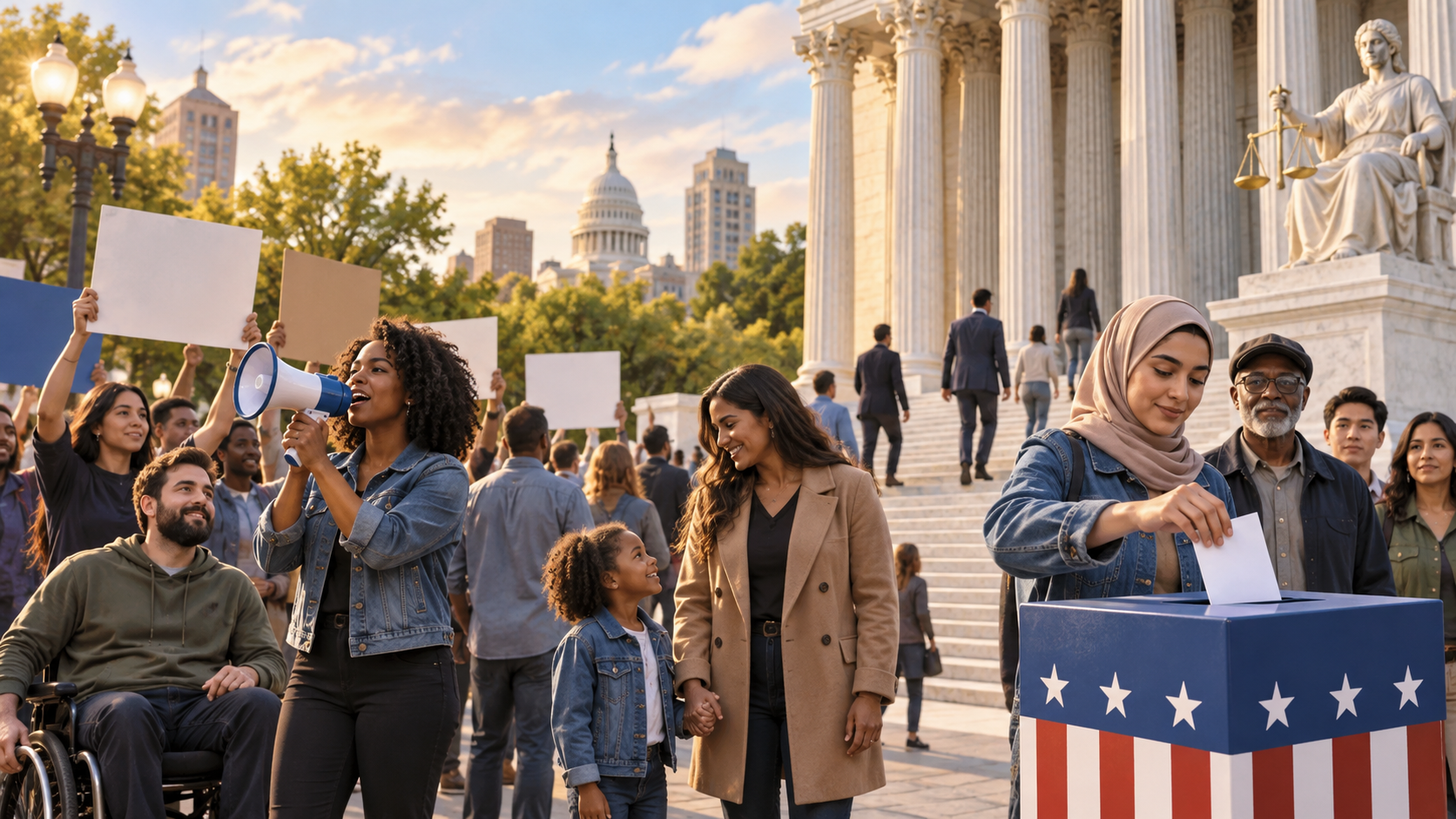
This beginner-friendly guide explains civil rights vs civil liberties for readers who want a simple side-by-side comparison. It keeps the focus on practical examples, core definitions, and the questions that make civic debates easier to understand.
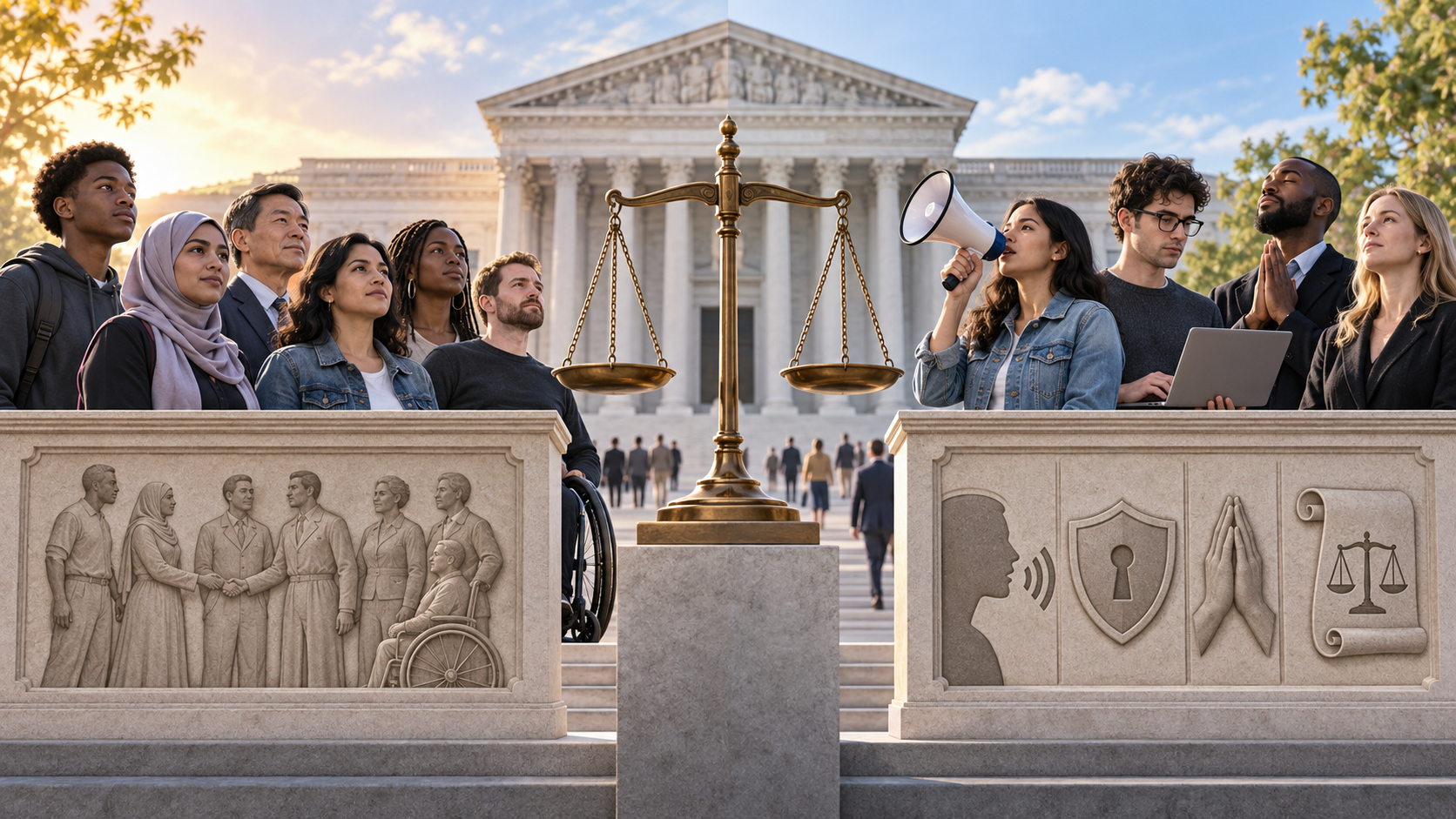
The simplest difference is this: civil rights are about equal treatment, while civil liberties are about individual freedoms. Civil rights ask whether people are being treated fairly and without unlawful discrimination. Civil liberties ask whether government is respecting protected freedoms and following proper legal limits. Both are essential in a constitutional democracy, and both can appear in the same dispute.
The civil rights side
Civil rights protections are designed to prevent exclusion, discrimination, and unequal access. They often apply when a person is denied a job, vote, apartment, education, public service, or fair treatment because of a protected characteristic. Civil rights law can require government, employers, schools, landlords, and public-facing institutions to change practices that produce unlawful discrimination. The main idea is equal participation in civic, economic, and public life.
The civil liberties side
Civil liberties protect personal freedoms from improper government interference. They include speech, religion, press, assembly, privacy, due process, and protections in criminal investigations and trials. Civil liberties questions often ask whether government has gone too far, whether a restriction is too broad, whether officials followed the correct process, or whether a person received a fair chance to challenge government action.
Examples that show the difference
If a city denies a permit for a march because officials dislike the message, that is mainly a civil liberties issue involving speech and assembly. If a polling place creates barriers that affect a protected group unfairly, that is mainly a civil rights issue. If police search a home without legal justification, that is a civil liberties issue. If a public agency provides poorer service to one group than another because of bias, that is a civil rights issue. Some disputes involve both.
Why the distinction is useful
The distinction helps identify the legal problem and the remedy. A civil rights case may seek equal access, policy changes, damages, or enforcement against discrimination. A civil liberties case may seek to stop an unconstitutional restriction, exclude improperly obtained evidence, or require fair procedures. Knowing which question is being asked makes public debate much clearer.
Bottom line
The useful habit is to connect civil rights vs civil liberties to real institutions and real choices. Once the terms are clear, it becomes easier to see which rights are involved, who has responsibility, and what a fair solution would need to protect.