The visible work zone is only part of the schedule
A driver passes the same barriers for weeks and sees only a few people working. The natural reaction is that the job should be moving faster. Sometimes avoidable delays deserve exactly that criticism. At other sites, the apparent inactivity reflects a utility relocation, a required material test, a short permitted work window, or a stage that must finish before another crew can enter. Road construction is a sequence of dependent tasks performed while people often continue using the corridor. Its duration is not explained simply by the number of workers visible from a passing vehicle. The useful policy inquiry is more specific: which activity controls completion, why does it take that long, and what would safely shorten it? Following a project from preparation through reopening reveals where better management, earlier coordination, different contracts, or construction technology can help—and where rushing can produce a road that needs another repair sooner.
Distinguish project delivery from the time barriers remain
A road project can spend years in planning, design, property acquisition, utility coordination, funding approval, and procurement before major construction begins. Those activities differ from the period when lanes are closed. A claim that a bridge was replaced in a weekend may accurately describe the final installation while leaving out months of design, fabrication, and preparation. Compare like measures when judging performance: total delivery time, construction duration, and traffic disruption each answer a different question about what the public experiences and pays for.
Project scope matters as well. Resurfacing a sound pavement is different from rebuilding drainage, moving utilities, replacing a bridge, changing an intersection, and reconstructing the road underneath. Two jobs with similar lengths can therefore have very different schedules. Request a plain description of the work and its major milestones before comparing completion dates. A schedule becomes more useful when residents can see which parts improve the driving surface and which address less visible structural, safety, accessibility, or water-management needs.
The critical path explains why extra workers may not solve a delay
Some tasks must follow others: a pipe may need relocation before excavation, a foundation before bridge elements, or testing before traffic can return. The longest chain of dependent activities governs the earliest feasible completion under the schedule, commonly described as the critical path. Adding a paving crew will not shorten a job waiting for a utility connection that paving depends on. Effective acceleration identifies the controlling task, examines whether its duration can be reduced, and tests whether another dependency then becomes controlling. Public updates need not display every scheduling detail, but they should explain the current constraint instead of reporting only a percentage complete that says little about when the road will reopen.
Underground utilities can turn a simple-looking job into a coordination problem
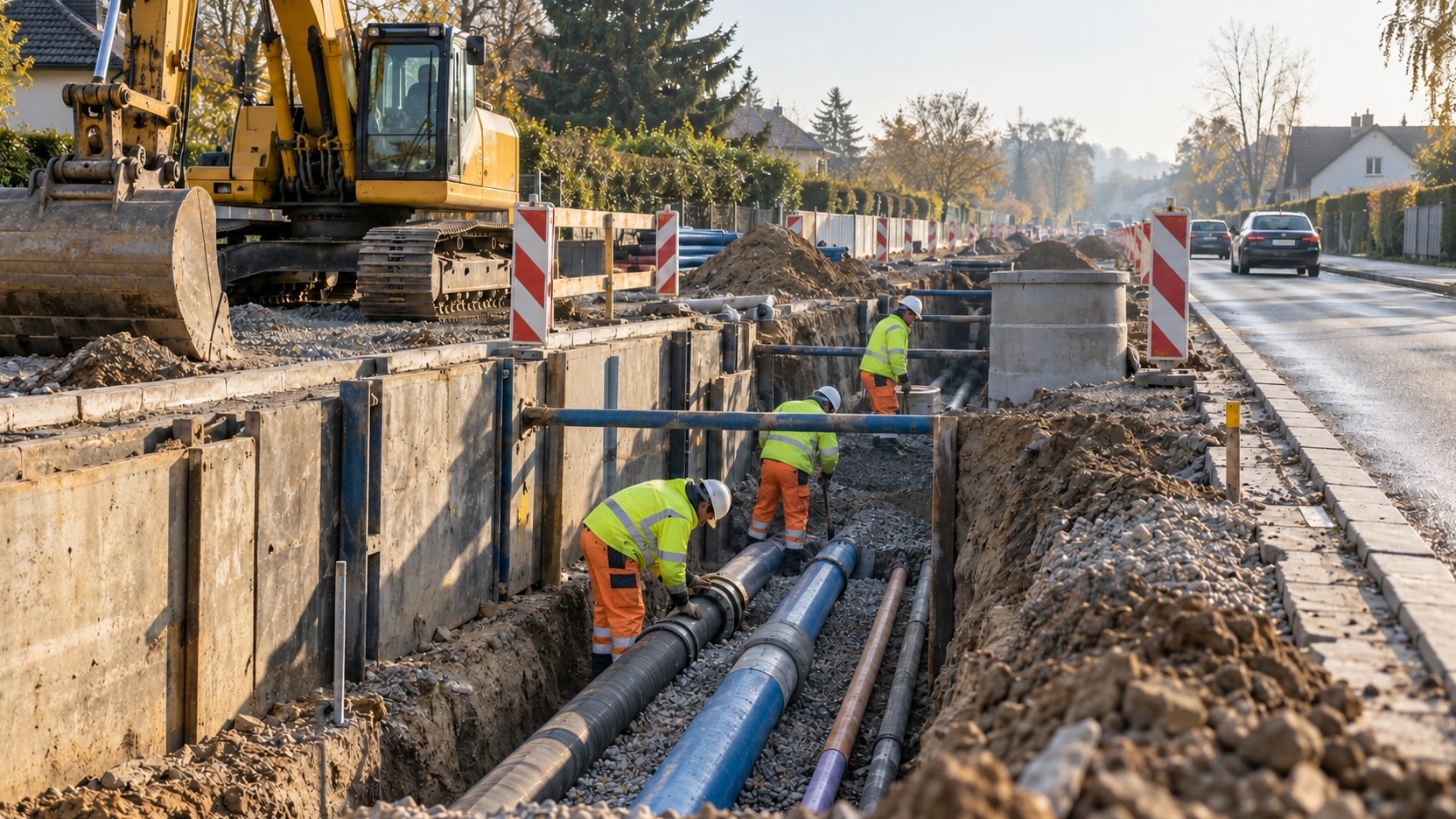
Water, sewer, gas, power, and communications infrastructure often occupies the same corridor as the road. Records may be incomplete, facilities may be deeper or shallower than expected, and a utility owner may need to keep service operating during relocation. Excavation can reveal a conflict that requires redesign rather than an immediate field adjustment. Early investigation reduces surprises without making every underground condition knowable. FHWA’s utility-relocation program guidance illustrates the legal and administrative coordination surrounding this work on federal-aid highway projects.
Responsibility for utility costs depends on rights, agreements, law, and the circumstances of the relocation. The road agency cannot always direct an independent utility crew as though it were part of the paving contractor. Agreements must establish who designs the change, who performs it, who pays, and when access becomes available. A late disagreement can hold up a much larger construction operation. Resolving those responsibilities before advertising the road contract can be more valuable than demanding longer shifts once the corridor is already disrupted.
Physical sequencing adds another challenge. A replacement line may need installation, testing, connection, and abandonment of the old line before the next stage can begin. Service interruptions may require coordination with customers or occur only during a limited window. Inspection and safety requirements protect people who depend on the infrastructure, so bypassing them is not a sound schedule remedy. The management issue is whether the steps were anticipated, resourced, and coordinated effectively rather than whether underground work is visible to passing drivers.
A better project record identifies known utility risks and updates them as information improves. Agencies can use surveys, subsurface investigation, joint coordination meetings, and early relocation packages where appropriate. Contractors need a clear process for reporting conflicts and receiving timely decisions. Residents should ask whether a delay reflects an unforeseeable condition, incomplete preparation, or an unresolved agreement. Those explanations point to different remedies and make accountability more meaningful than blaming every underground surprise on the same actor.
Keeping traffic moving can make construction take longer
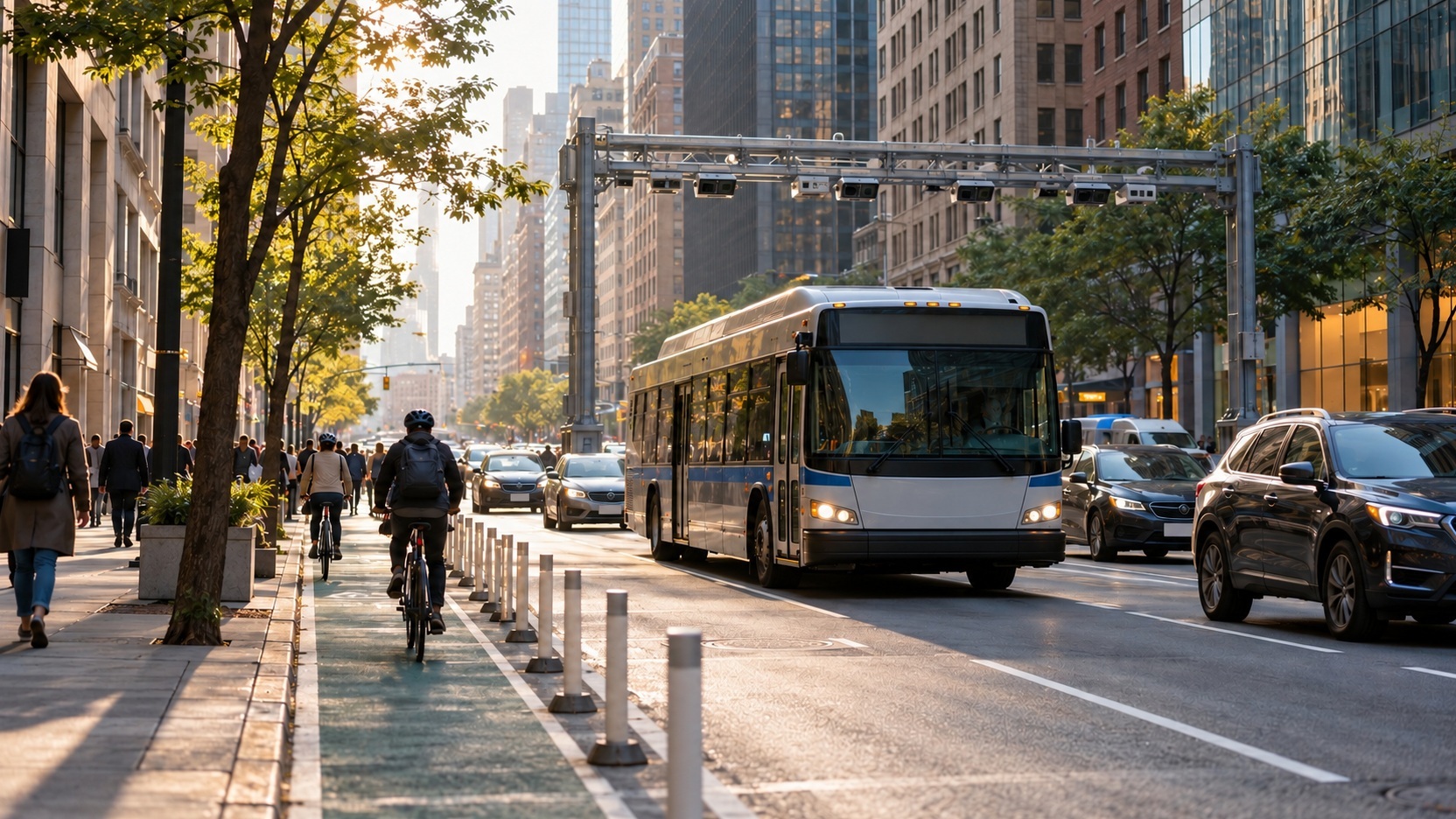
A corridor that stays partly open may require construction in narrow stages. Workers build one portion, shift traffic, establish protection again, and then reach the next portion. Maintaining driveways, emergency access, pedestrian routes, transit service, and business deliveries creates additional constraints. A full closure can sometimes permit faster and safer construction, but it sends traffic elsewhere and may impose substantial costs on residents and neighboring streets. The right choice depends on the network and affected users, not only the contractor’s preferred work arrangement.
Night work is another tradeoff rather than a universal cure. It can reduce daytime disruption but requires lighting, suitable staffing, available materials, and safe working conditions. Noise restrictions, worker fatigue, nearby homes, and the nature of the task can limit its usefulness. Some operations fit an overnight closure; others cannot be interrupted neatly before morning traffic returns. A credible traffic-management plan compares the total disruption under feasible staging options and explains why the selected arrangement offers the best balance for that particular corridor.
Material behavior and weather impose real boundaries
Concrete develops strength through processes affected by mixture, temperature, moisture, and curing. Asphalt placement likewise requires appropriate material and site conditions. A surface can look finished before it is ready for its intended traffic loading. FHWA’s concrete-repair guidance describes opening criteria based on strength or specified time under appropriate conditions. There is no single waiting period that applies to every pavement product and repair. The relevant specifications and test results determine when reopening is acceptable.
Rain can affect earthwork, drainage installation, compaction, and placement conditions, while heat or cold can change work methods and productivity. A weather delay is not adequately explained merely by pointing to one wet day; the resulting ground conditions or missed sequence may affect several later activities. Good scheduling includes realistic seasonal assumptions and contingencies. Officials should distinguish ordinary foreseeable weather from exceptional conditions and explain how the contract allocates the resulting risk rather than treating every event as either an excuse or contractor fault.
Testing and inspection protect long-term performance. Compaction, material quality, drainage details, and structural connections may require acceptance before work is covered or loaded. Eliminating those checks can trade a short apparent saving for early deterioration or a safety problem. Faster test methods, better laboratory coordination, and clear acceptance procedures can reduce unnecessary waiting while maintaining the standard. The useful distinction is between time needed to establish quality and administrative delay in obtaining or acting on information that was already available.
Funding and procurement shape the project before the first shift
A project needs an authorized scope, a financing plan, design information, and a contract that attracts qualified bidders. Funding conditions, coordination among governments, property issues, and changes in cost can affect when work begins or how it is divided into phases. A low bid is not the only measure of value if it produces avoidable disruption, change orders, or poor performance, but alternative selection methods require legal authority and capable oversight. Agencies should explain whether a funding delay actually prevented a construction activity or occurred earlier in development. Separating those stages prevents every slow project from being attributed to one vague category called bureaucracy and directs reform toward the approval, resource, or procurement issue that actually controlled progress.
Different delivery methods can improve coordination when the fit is right
Traditional design-bid-build separates design and construction procurement. Design-build combines them within a delivery arrangement that can allow coordination and overlapping work, while construction manager/general contractor approaches involve construction expertise during design before the later construction arrangement is finalized. FHWA’s alternative-contracting overview describes these options. Their value depends on project characteristics, legal authority, market capacity, risk allocation, and the owner’s ability to manage the arrangement. A different label does not guarantee that uncertain utilities or an incomplete scope cease to matter.
Incentives can also reward reduced disruption or earlier completion, provided the target is measurable and the contract handles risk fairly. A deadline that rewards reopening while overlooking durability can encourage the wrong behavior. A well-designed incentive identifies the public benefit, protects required quality and safety, and avoids paying a premium for a date the contractor would have met anyway. Agencies need enough expertise to evaluate proposals and administer the contract. Faster procurement without that capability can move uncertainty into construction rather than removing it.
Prefabrication moves some work away from the road
A documented Utah bridge replacement shows what acceleration can mean. FHWA’s account of the 2007 4500 South project reports four months of offsite bridge construction, followed by installation over a weekend. I-215 traffic was affected for that weekend, while the 4500 South road experienced ten days of impact. The conventional comparison estimated about 120 days of traffic disruption. The rapid installation therefore moved work away from traffic rather than compressing all engineering and fabrication into two days. This is a project-specific delivery result, not a promise that another corridor has the same space, geometry, or staging options.
A rapid installation depends on earlier work being ready. Foundations, approach roads, utilities, permits, delivery routes, and equipment all need coordination so one missing piece does not waste the closure. Some sites lack space for staging or cannot accommodate the transport of large components. Others offer an excellent fit. A fair comparison includes the premium, if any, alongside avoided delay costs and long-term performance. Counting only the contractor’s construction price can miss large costs imposed on everyone using the corridor.
FHWA reported an $800,000 acceleration premium against $4 million in saved user-delay costs for this project. Those are different accounts: agency construction spending and travelers’ estimated delay. Compare both, but verify the delay assumptions before transferring the cost-benefit result to another corridor.
Other delays can be reduced through earlier equipment orders, timely design decisions, and coordination with adjacent projects. Match the improvement to the activity actually controlling completion. After reopening, compare the original and actual milestones and inspect durability; a short closure followed by repeated repairs would weaken the claimed benefit. Reporting scope changes separately keeps a revised deadline from disguising avoidable delay.
Ask for an explanation that connects delay to a remedy
For a frustrating work zone, ask what remains on the critical path, which agency or contractor controls it, and what the revised reopening milestone means. Request the reason for the change, available acceleration options, and the associated cost or disruption. A useful answer distinguishes necessary sequencing from preventable waiting and identifies the decision that could improve the result. Road construction will always involve physical constraints and competing access needs, but that does not excuse weak preparation or opaque communication. The best reforms shorten avoidable delay while preserving safety, durability, and accountability, giving the public a road that opens reliably and stays in good condition after the barriers are gone.