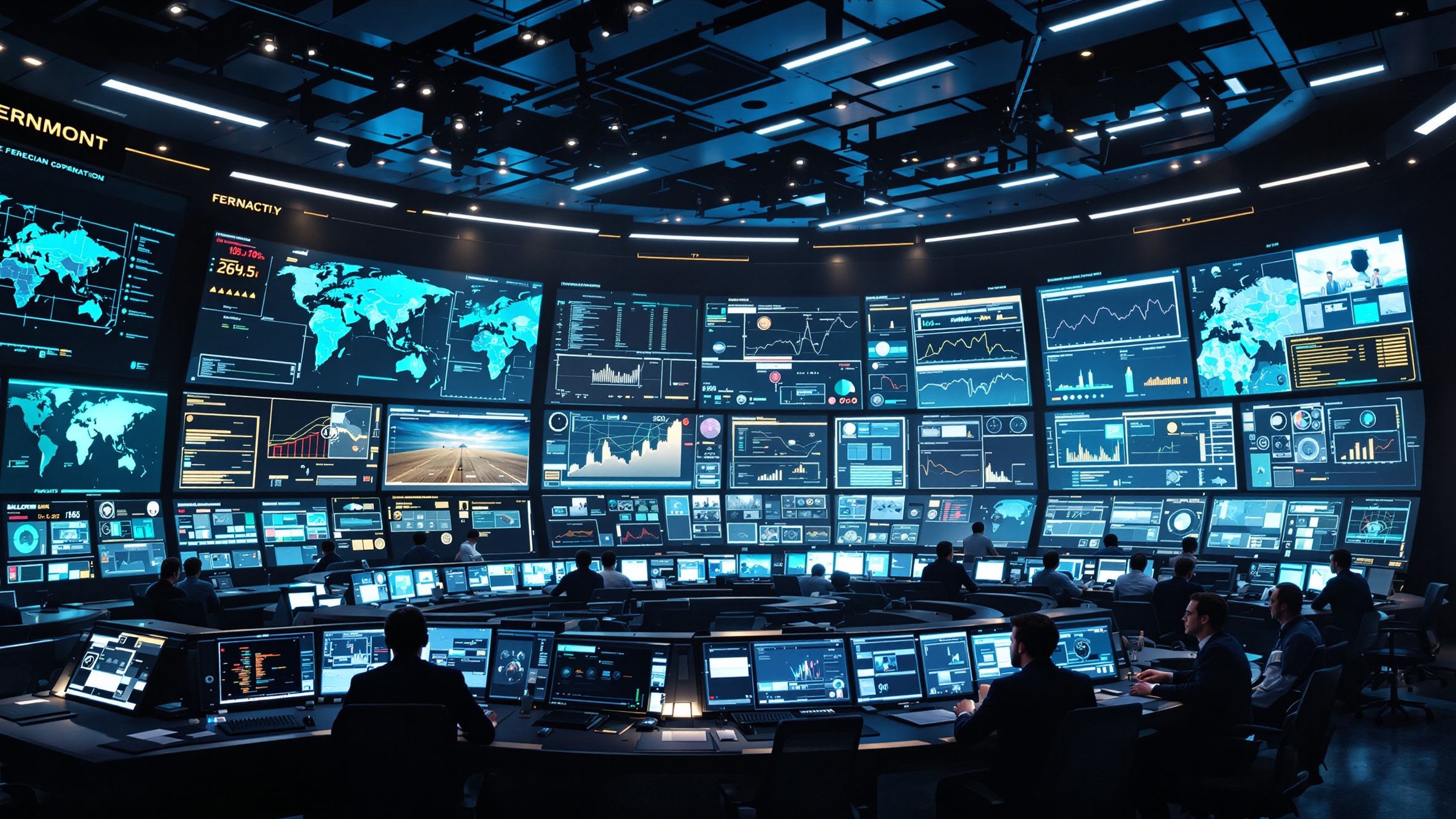
Federal agencies are among the most important institutions in the United States government, yet many people only have a basic understanding of what they actually do. These organizations operate behind the scenes to enforce laws, manage national programs, protect public safety, regulate industries, conduct scientific research, and provide services that millions of Americans rely on every day. From food safety inspections and airport security to environmental protection and healthcare programs, federal agencies shape countless aspects of daily life across the country.
The modern federal government is far more than elected officials and political leaders. While Congress creates laws and the president oversees the executive branch, federal agencies carry out the actual work of implementing national policy. They are responsible for turning legislation into action by creating regulations, enforcing standards, conducting investigations, and managing large-scale government operations.
Understanding federal agencies is important because they influence everything from education funding and workplace protections to military defense and economic policy. They also play critical roles during emergencies such as natural disasters, pandemics, financial crises, and cybersecurity threats. As technology and global challenges continue evolving, federal agencies have become increasingly central to the functioning of modern American society.
For beginners trying to understand how the United States government works, federal agencies provide a practical window into how laws and policies affect everyday life. They represent the operational side of government, connecting political decisions with real-world implementation and public services.
A: Federal agencies are national government organizations that carry out laws, run programs, enforce rules, and serve the public.
A: Congress usually creates agencies through laws that define their duties and authority.
A: Most are part of the executive branch, though some independent agencies have special structures.
A: They help turn broad laws into real-world services, rules, investigations, and public programs.
A: Examples include the IRS, FBI, FDA, EPA, CDC, NASA, FEMA, TSA, and SSA.
A: Yes, agencies can create regulations when Congress gives them authority to do so.
A: Yes, many proposed regulations include public comment periods before final rules are adopted.
A: Congress, courts, inspectors general, watchdogs, and the public all help hold agencies accountable.
A: Congress funds agencies through federal budget and appropriations laws.
A: Agencies affect taxes, benefits, travel, healthcare, food safety, jobs, emergencies, and many daily-life systems.
What Is a Federal Agency?
A federal agency is an organization created by the United States government to carry out specific responsibilities under federal law. Most federal agencies operate within the executive branch of government and report directly or indirectly to the president. Their primary purpose is to manage specialized areas of government activity such as transportation, healthcare, law enforcement, national defense, agriculture, labor regulation, scientific research, and environmental protection.
Federal agencies are designed to handle complex responsibilities that require expertise, long-term planning, and continuous oversight. Congress creates laws that establish broad national goals, but agencies develop the detailed systems needed to implement those laws effectively.
For example, Congress may pass legislation involving clean air standards, but the agency responsible for environmental protection creates the technical regulations, enforcement procedures, scientific studies, and compliance programs necessary to make those standards work in practice.
Some agencies focus mainly on regulation and enforcement, while others provide direct public services or conduct scientific research. Certain agencies operate nationally, while others work closely with state and local governments to coordinate programs and policies.
Why Federal Agencies Exist
The United States government is too large and complex for Congress or the president alone to manage every operational responsibility directly. Federal agencies exist because modern government requires specialized organizations staffed with experts capable of handling highly technical and large-scale issues.
As the country expanded throughout history, national challenges became more complicated. Economic growth, industrial development, transportation systems, public health concerns, environmental risks, and international relations created the need for dedicated agencies with focused responsibilities.
Federal agencies allow the government to operate efficiently by dividing responsibilities into specialized areas. Instead of one centralized institution managing everything, different agencies focus on particular issues. This structure improves organization, expertise, and accountability.
For example, public health experts work within health agencies, environmental scientists work within environmental agencies, economists work within financial agencies, and engineers work within transportation and infrastructure organizations. These agencies rely on professional expertise to address highly technical issues that require continuous oversight and research.
The Difference Between Departments and Agencies
Many beginners become confused by the difference between federal departments and federal agencies. While the terms are often used together, they are not exactly the same thing.
Federal departments are large executive branch organizations led by Cabinet secretaries who advise the president. Examples include the United States Department of Defense and the United States Department of Education. These departments oversee broad national responsibilities and often contain multiple agencies within them.
Federal agencies can either operate independently or exist within larger departments. Some agencies are highly specialized organizations with focused responsibilities, while others function as major operational divisions inside Cabinet departments.
For example, the Food and Drug Administration operates within the United States Department of Health and Human Services. Meanwhile, the National Aeronautics and Space Administration operates as an independent federal agency rather than as part of a Cabinet department.
This structure allows the federal government to balance centralized leadership with specialized operational expertise.
How Federal Agencies Operate
Federal agencies operate by carrying out responsibilities assigned to them through laws passed by Congress. Once legislation is approved, agencies develop regulations and procedures necessary to implement those laws effectively.
Agencies often employ experts including scientists, attorneys, economists, engineers, healthcare professionals, investigators, analysts, and administrators. These specialists help agencies interpret laws, conduct research, manage programs, and enforce federal standards.
Most agencies are funded through the federal budget process. Congress allocates money to agencies each year so they can operate programs, hire employees, conduct research, and enforce regulations.
Federal agencies also create administrative rules that clarify how laws should function in practice. These rules can influence industries, businesses, schools, healthcare providers, transportation systems, and public services nationwide.
In many cases, agencies conduct inspections, investigations, audits, and compliance reviews to ensure laws are being followed properly. They may also issue penalties or enforcement actions when violations occur.
Major Categories of Federal Agencies
Federal agencies generally fall into several broad categories depending on their responsibilities and missions.
Regulatory agencies oversee industries and enforce standards designed to protect public safety, economic fairness, and consumer rights. Examples include environmental regulators, financial oversight organizations, and workplace safety agencies.
Law enforcement and security agencies investigate crimes, protect national security, and enforce federal laws. These agencies address issues such as terrorism, cybercrime, immigration enforcement, organized crime, and public corruption.
Scientific and research agencies focus on innovation, technology development, public health studies, and environmental research. They contribute to medical breakthroughs, space exploration, climate science, and infrastructure development.
Service-oriented agencies provide direct assistance to the public through programs involving healthcare, education, retirement benefits, disaster relief, and housing support.
Economic and financial agencies monitor inflation, employment conditions, banking systems, trade policy, and economic stability across the country.
The Most Well-Known Federal Agencies
Several federal agencies have become widely recognized because of their visibility and influence in American life.
The Federal Bureau of Investigation investigates federal crimes, cybersecurity threats, terrorism, and public corruption cases. It is one of the most recognized law enforcement agencies in the world.
The Centers for Disease Control and Prevention focuses on disease prevention, public health preparedness, and medical research. The agency became especially prominent during the COVID-19 pandemic.
The United States Environmental Protection Agency regulates pollution, environmental safety, and sustainability initiatives designed to protect natural resources and public health.
The Transportation Security Administration oversees airport security and transportation safety systems throughout the country.
The National Aeronautics and Space Administration leads American space exploration and scientific research involving satellites, astronauts, planetary missions, and aerospace technology.
The Social Security Administration manages retirement benefits, disability programs, and financial assistance systems relied upon by millions of Americans.
How Federal Agencies Affect Everyday Life
Many people do not realize how frequently they interact with systems influenced by federal agencies. Food safety inspections, workplace protections, highway standards, aviation regulations, environmental rules, and healthcare programs all involve federal oversight in some form.
When people travel through airports, federal transportation agencies help maintain security and safety procedures. When consumers purchase medications, food products, or medical devices, federal health agencies regulate quality and safety standards.
Environmental agencies monitor pollution levels and water quality to protect public health. Labor agencies enforce workplace standards involving wages, overtime rules, and employee protections.
Financial agencies help regulate banking systems and economic stability. Education agencies oversee federal student aid programs and accessibility protections for schools.
Even weather forecasting, disaster response coordination, scientific innovation, and internet infrastructure involve federal agencies working behind the scenes to support national systems and public services.
Federal Agencies During National Emergencies
Federal agencies become especially visible during major emergencies and national crises. Natural disasters, pandemics, economic recessions, cybersecurity attacks, and national security threats often require rapid coordination between multiple agencies.
During hurricanes, floods, and wildfires, federal emergency agencies provide disaster relief funding, emergency housing support, and recovery assistance to affected communities.
Public health emergencies require healthcare agencies to coordinate disease tracking, vaccine distribution, laboratory testing, and medical guidance for the public.
Cybersecurity agencies respond to digital threats targeting infrastructure, financial systems, communication networks, and government operations.
Economic agencies monitor financial markets and banking systems during recessions or periods of instability to reduce risks and maintain economic confidence.
These emergency responsibilities demonstrate how interconnected federal agencies have become in modern crisis management and national preparedness.
Criticism and Challenges Facing Federal Agencies
Although federal agencies play essential roles in society, they also face criticism and ongoing challenges. Some critics argue that certain agencies create excessive regulations that burden businesses and slow economic growth. Others believe agencies sometimes lack transparency or become too politically influenced.
Balancing public safety, economic interests, civil liberties, and technological innovation can be extremely difficult. Agencies often face pressure from political leaders, industry groups, advocacy organizations, and the public simultaneously.
Technology has also created new challenges for federal agencies. Cybersecurity threats, artificial intelligence, digital privacy concerns, cryptocurrency regulation, and online misinformation require agencies to adapt quickly to rapidly changing conditions.
Funding limitations can also affect agency operations. Budget disputes and staffing shortages sometimes reduce the ability of agencies to conduct research, enforce regulations, or provide services effectively.
Public trust remains another major issue. Agencies must maintain credibility by communicating clearly, operating transparently, and demonstrating accountability to the public.
The Future of Federal Agencies
Federal agencies are expected to evolve significantly in the coming decades as technology, globalization, and environmental change continue reshaping government priorities.
Artificial intelligence and automation are likely to transform how agencies process information, analyze data, detect fraud, and manage services. Digital modernization efforts may improve efficiency while creating new debates surrounding privacy and ethics.
Climate change is expected to increase the importance of environmental management, infrastructure resilience, disaster preparedness, and energy policy coordination.
Cybersecurity will remain one of the most critical federal responsibilities as digital systems become increasingly central to transportation, healthcare, communication, and financial operations.
Healthcare innovation, biotechnology, space exploration, renewable energy development, and advanced manufacturing technologies will also continue driving new forms of federal oversight and scientific research.
As society becomes more technologically connected and globally integrated, federal agencies will likely become even more influential in shaping national policy and public services.
Conclusion
Federal agencies are essential parts of the United States government that help turn laws and policies into real-world action. They regulate industries, protect public health, enforce laws, support scientific research, manage national security, and provide services that millions of Americans depend on every day.
Although many agencies operate behind the scenes, their influence can be seen throughout nearly every area of modern life. From airport security and food safety to disaster response and economic stability, federal agencies help maintain the systems that keep the country functioning.
For beginners trying to understand government operations, learning about federal agencies provides a practical and accessible way to see how public policy affects society. These organizations connect political decisions with implementation, creating the operational structure that allows modern government to function effectively.
As the world continues changing through technological advancement, environmental challenges, and global interconnectedness, federal agencies will remain central to protecting public interests and guiding the future direction of the nation.