Clear water still needs a chain of evidence
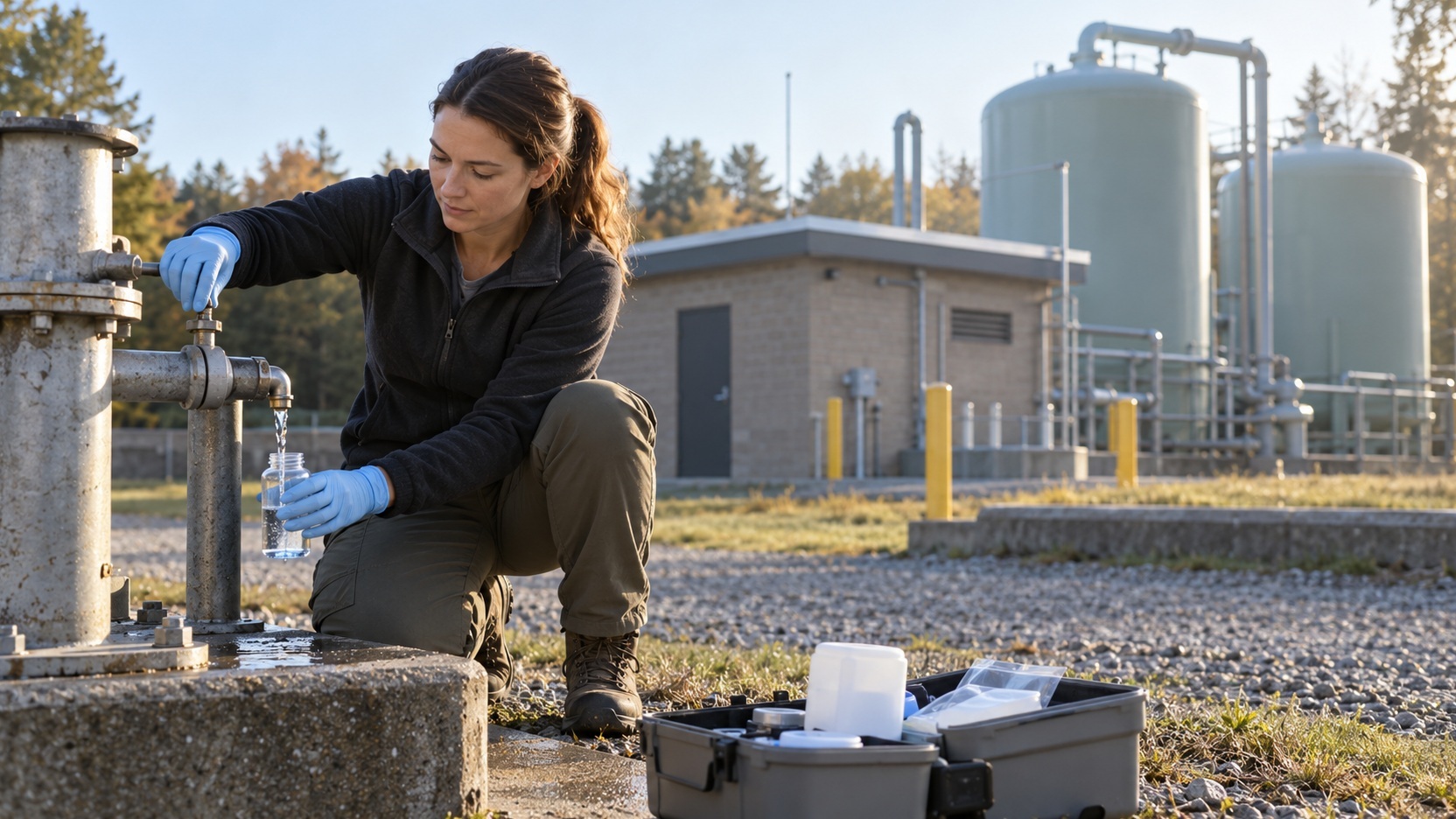
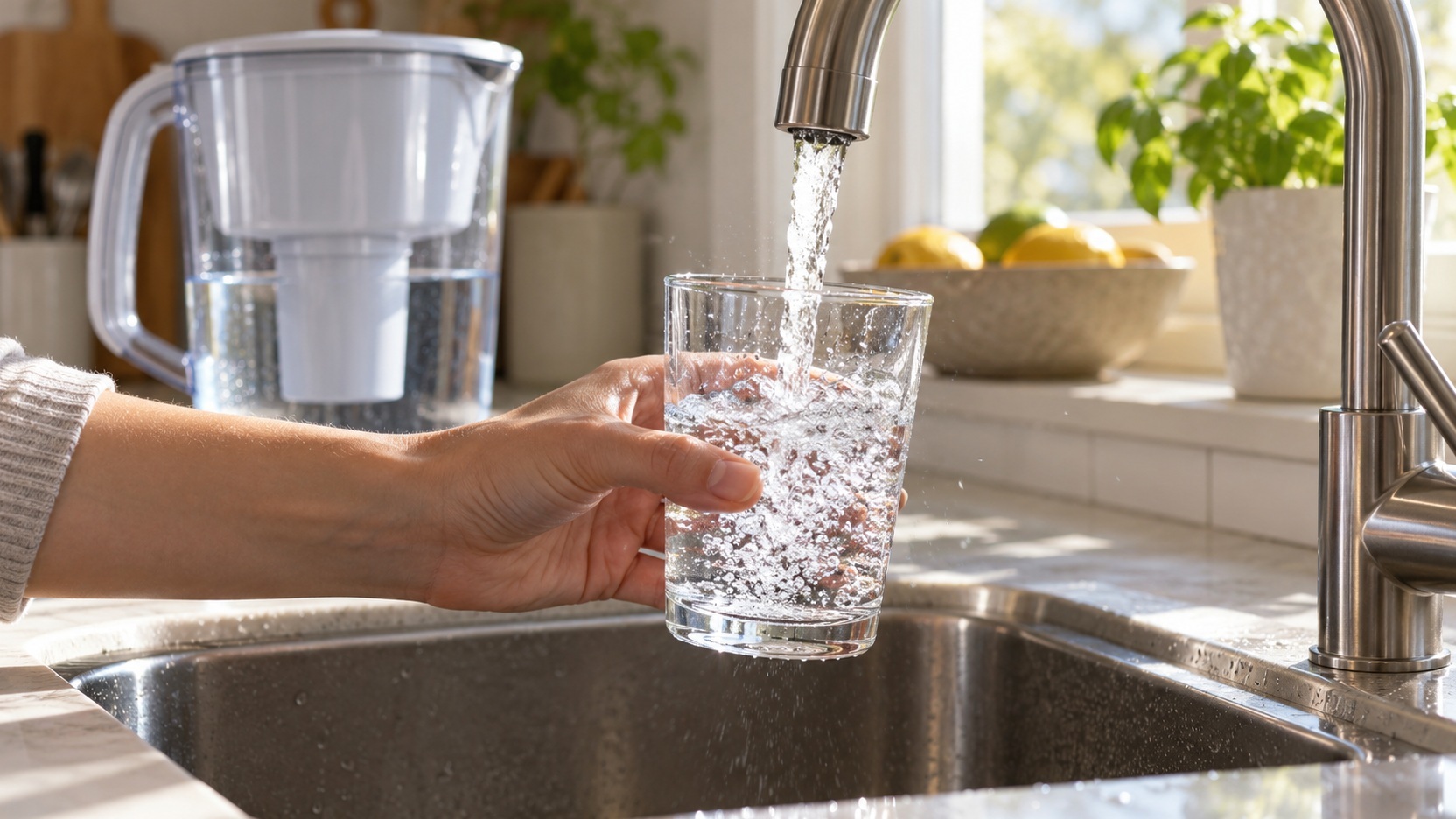
A glass of tap water can look perfectly ordinary while prompting a complicated public-policy debate. Who tested it? Which contaminants were measured? Did the sample come from the treatment plant, the distribution network, or a kitchen faucet? Drinking-water protection depends on that entire chain, from the source watershed to the plumbing inside a building. Federal standards establish important requirements for public systems, states often carry out day-to-day oversight, and utilities operate treatment and monitoring programs. Households still need to understand local advisories and the limits of what a systemwide report can establish. People using private wells face a different responsibility because those wells generally are not covered by federal public-water-system regulations. Assessing safety therefore begins with identifying the supply and asking for the evidence relevant to it, rather than judging a glass by its taste, buying a filter at random, or assuming a reassuring annual summary answers every household concern.
Start with the source that actually serves your address
A public water system can be large or small, publicly or privately operated, and supplied by groundwater, surface water, or a combination. The label public describes whom the system serves under regulatory definitions; it does not necessarily describe ownership. A city utility, a rural association, or another regulated supplier may all deliver household drinking water. Find the supplier’s exact name on the bill or through the property manager before searching for monitoring results. A nearby city’s report is not automatically relevant to a home outside its service area.
Private-well owners commonly arrange inspection, testing, maintenance, and treatment, subject to state and local requirements. EPA recommends annual testing for total coliform bacteria, nitrates, total dissolved solids, and pH, with additional testing for local hazards. Flooding, repairs, or a change in water quality can call for prompt testing beyond that routine. A neighbor’s result cannot establish the condition of your well: depth, construction, and groundwater movement can differ. Ask the health department which added contaminants matter locally and use an appropriate state-certified laboratory.
What an enforceable standard can and cannot promise
Drinking-water regulation addresses contaminants through different legal tools. Some standards set a maximum concentration; others require a treatment technique where controlling the process is the appropriate regulatory approach. Monitoring requirements specify how systems collect evidence of compliance. These rules make safety more than a voluntary promise and create a basis for enforcement. They do not mean every possible chemical is continuously measured at every faucet or that every household has identical exposure throughout the year.
Health-based goals and enforceable limits also serve different purposes. A goal can describe a concentration at which adverse effects are not expected, while an enforceable limit incorporates the legal framework for setting and implementing a drinking-water requirement. Reading the two as interchangeable can create confusion when a report lists both. A result below an enforceable limit establishes something specific about that measurement and standard; it does not establish that the substance is desirable or that no further reduction could ever have value.
Other water characteristics affect appearance, taste, odor, scaling, or staining and may be addressed through secondary guidance or local measures. These conditions deserve investigation, but their presence alone does not identify a health risk, and their absence does not prove safety. A metallic taste is a reason to ask about the source and plumbing, not a laboratory result. Conversely, contaminants that have no noticeable taste can require careful monitoring. Sensory clues and analytical evidence should inform each other without being treated as substitutes.
Read the annual report as a record with boundaries
A consumer confidence report is a dated account, not a live safety alert. Imagine an explicitly fictional row listing nitrate at 2 milligrams per liter measured as nitrogen, a sampling date in the previous summer, and a maximum contaminant level of 10 milligrams per liter on the same basis. The detection is below that listed limit; the number 2 is not itself a violation. Compare the same substance, units, and reporting basis before making that judgment: nitrate reported as nitrogen cannot be casually compared with a value reported as the nitrate ion. The EPA report resource explains how to read the supplier’s actual table. Check the range as well as a summary value, the sampling period, and any violation or correction statement. A satisfactory annual row does not resolve a separate current advisory, an unmeasured contaminant, or a household-plumbing concern.
The last stretch of pipe can change the picture
Water can meet treatment requirements and still encounter problems on the journey to a faucet. Distribution-system breaks, pressure loss, storage conditions, service lines, and building plumbing can affect quality in different ways. Some contaminants originate mainly upstream; others can enter water through contact with plumbing materials. This is why a treatment-plant result cannot resolve every concern about a particular apartment or older house. The relevant investigation may need to examine the building and the service connection as well as the utility’s source.
Lead illustrates the importance of location-specific evidence. A household concerned about lead should ask about service-line materials, the utility’s corrosion-control approach, and sampling that follows the appropriate protocol. Building owners or managers may have records unavailable to tenants. Sampling instructions matter because collection conditions can substantially affect what a result represents. Follow the laboratory or local health authority’s guidance rather than improvising a test and drawing broad conclusions from an unrepresentative sample. A treatment device’s lead-reduction claim should likewise be verified for that specific device.
An advisory tells you which action fits the hazard
A boil-water advisory generally addresses situations where microbial contamination may be present, such as certain pressure-loss events or system disruptions. Follow the issuing authority’s exact instructions about boiling, cooling, food preparation, and water used for brushing teeth. Advice may differ for vulnerable people or particular uses. An advisory can apply even when water appears clear. Sign up for local alerts and determine who receives them in a rental building, since a landlord’s utility account can otherwise leave residents dependent on forwarded information.
Boiling is not a universal water-treatment solution. It does not remove many chemical contaminants and can increase the concentration of some substances as water evaporates. A do-not-drink or do-not-use notice can therefore demand a different response from a boil-water notice. Do not choose an action solely because a previous advisory used it. Read the current notice’s hazard, affected area, permitted uses, alternative-supply arrangements, and lifting conditions. If an instruction seems ambiguous, contact the issuing authority rather than adapting a general internet checklist.
When an advisory ends, there may still be steps involving faucets, appliances, ice makers, or treatment equipment. Use the supplier’s instructions for the specific incident and building arrangement. A lifted advisory means the authority has determined that its stated conditions for ending the notice have been met; it is not a promise that every unrelated household plumbing issue has disappeared. Keep the notice and follow-up information if a workplace, school, or care setting needs a record of the incident and response.
Testing works best when it answers a defined concern
A useful testing plan begins with a reason: a new private well, flooding, a change in taste, nearby industrial contamination, a household plumbing concern, or a public-health recommendation. Contact the state drinking-water program, local health department, or a qualified laboratory for the appropriate analytes and collection instructions. A broad consumer kit can miss the substance of concern or use a screening method unsuitable for the conclusion being sought. Confirm that the laboratory is certified for the relevant work and ask how results will be interpreted.
For private wells, periodic testing for microbial and other locally important contaminants is a basic maintenance responsibility, and additional testing may be warranted after repairs, flooding, or a change in nearby land use. The precise schedule and panel should follow state or local guidance and the well’s circumstances. Keep results over time instead of treating one acceptable sample as permanent clearance. Patterns may reveal a developing problem, and a new household member with particular health needs may justify discussing exposure concerns with a qualified professional.
Choose treatment for the substance and the setting
A filter should be selected to reduce a specified contaminant under conditions relevant to the household. Activated carbon, reverse osmosis, and other technologies have different capabilities and maintenance needs. Look for an independent certification covering the particular reduction claim, the model, and its rated conditions rather than relying on a broad phrase such as purified water. A device that improves taste is not automatically suitable for lead, nitrate, microbes, or PFAS. A softener addresses hardness and should not be assumed to make unsafe water safe.
Installation and replacement matter as much as the purchase. A neglected cartridge, a bypassed device, or a system operating beyond its rated capacity may not provide the expected protection. Whole-house and point-of-use treatment solve different problems and bring different costs. Before committing to expensive equipment, obtain a credible diagnosis of the source problem and determine whether the utility, landlord, well owner, or household can address it more effectively at another point. The goal is an evidence-based reduction, not simply ownership of a device.
Bottled water can be useful during an incident or while a treatment problem is resolved, but it should be selected and handled with the same attention to the actual hazard. Cost and storage make indefinite substitution difficult for many households. For infants, people with compromised immune systems, or others with specific needs, ask a clinician and the relevant public-health authority about suitable water preparation. General reassurance about a product category does not replace advice tied to the contaminant, intended use, and person’s circumstances.
Compare conflicting claims without losing the local context
Consider two reports from the same street. The supplier’s sample describes treated water leaving a plant; a resident’s sample describes water after standing overnight in old building plumbing. Different findings need not mean someone fabricated a result. The locations and collection methods describe different parts of the source-to-faucet route. Compare those details before trying to decide which report represents the entire neighborhood, especially when the contaminant could enter after water leaves the treatment works.
The next action follows the difference. A possible source problem belongs with the supplier and regulator; a suspected fixture or service-line contribution may require a carefully collected household sample and work by the responsible property owner. A tenant can ask the landlord and local authority how that investigation proceeds. Do not substitute a nearby household’s result for testing at the affected address or assume a utility’s compliant plant result rules out a building-specific problem.
A sales demonstration needs the same scrutiny. Cloudiness, hardness, or a dissolved-solids reading alone does not identify every health hazard. Ask which substance was measured and whether an independent laboratory can confirm it. Otherwise a dramatic presentation can lead to buying a filter that does not address the actual concern. The useful purchase connects a credible finding with a verified treatment claim, realistic flow capacity, and replacement costs the household can maintain.
When evidence remains inconsistent, ask for a paired follow-up plan rather than another broad assurance. It might specify the sample taps, whether water should stand or flush first, the laboratory method, and the date results will be discussed. Those choices affect what the test can establish. A written sampling plan also lets a resident understand why two measurements differ, without requiring the resident to become a laboratory specialist or accept a seller’s interpretation on trust.
Community protection depends on infrastructure and transparency
Household precautions are only one part of drinking-water policy. Utilities need competent operators, reliable monitoring, maintained pipes, resilient power, source protection, and a way to finance replacements without placing an impossible burden on residents. Small systems can face especially difficult technical and financial constraints because fixed costs are spread across fewer customers. Public discussion should connect proposed spending to a named risk or service problem, compare feasible approaches, and explain how performance will be measured. A project is easier to assess when residents can see the problem, the cost allocation, and the evidence expected after completion.
For a resident, the practical routine is straightforward: identify the supply, obtain its report or a suitable well-testing plan, read current advisories, and investigate household-specific plumbing concerns. Ask precise questions when records are incomplete, and keep the answers. Safe drinking water is supported by a continuing system of prevention, measurement, maintenance, and correction. Understanding where each responsibility sits makes it easier to spot a gap and direct attention toward the institution or property owner able to fix it.